Historical report: Published November 11, 2026, at 09:57 China Standard Time. This article reflects the figures and product status reported at that time.
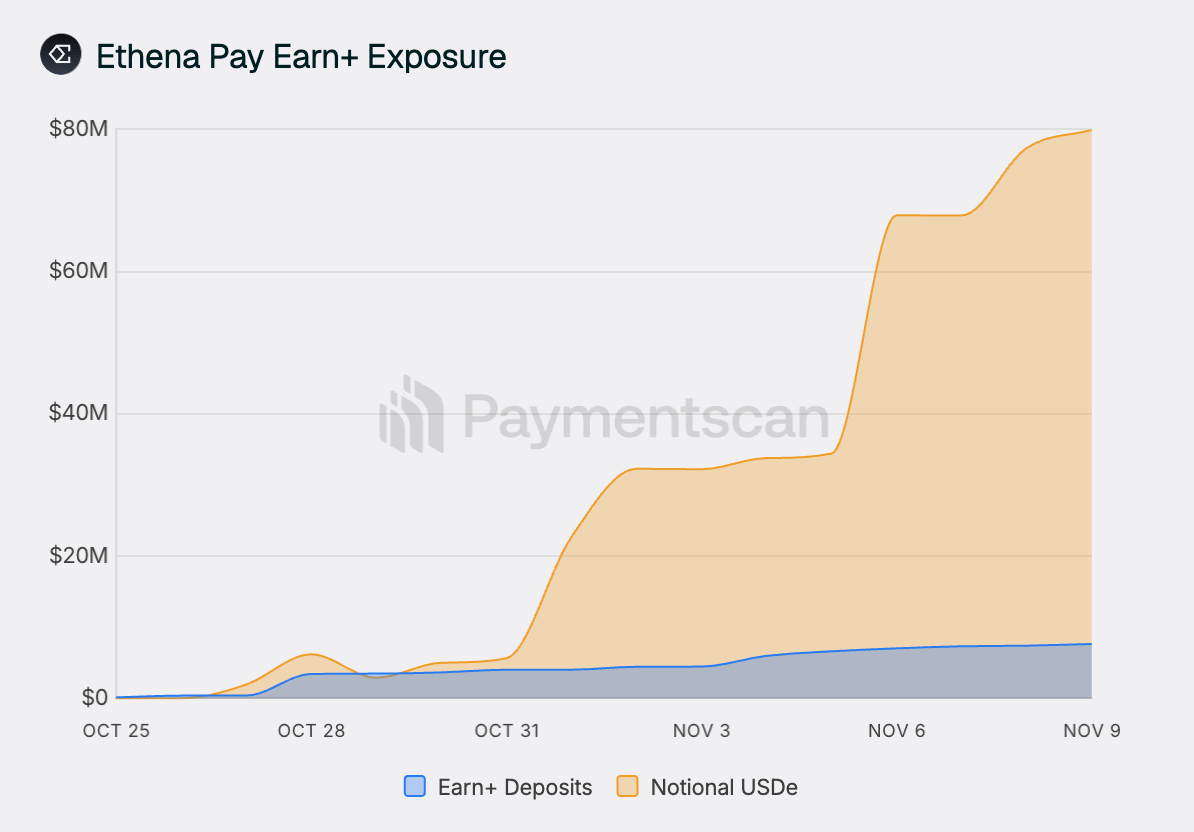
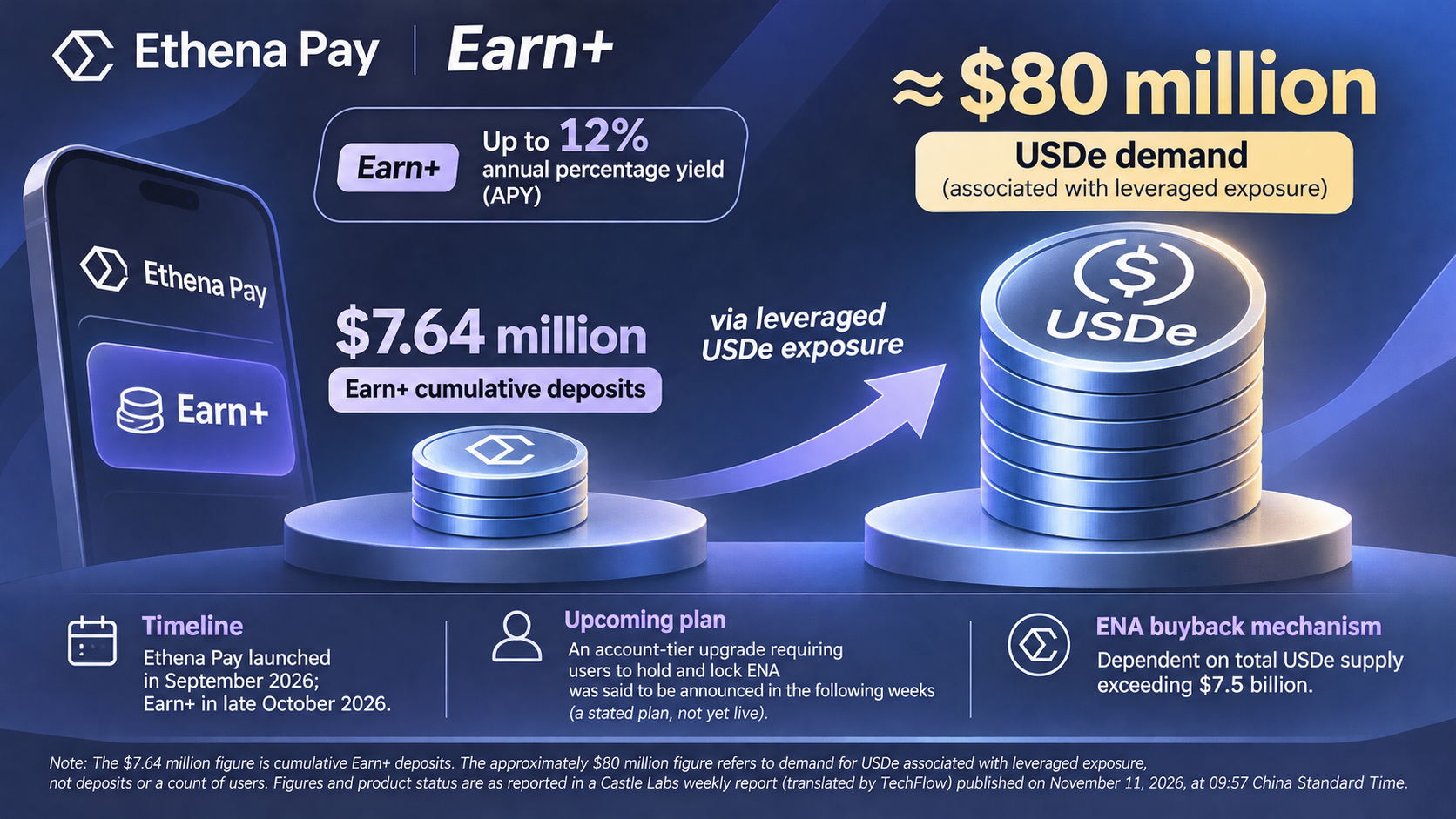
A Castle Labs weekly report, translated by TechFlow, put Ethena Pay’s Earn+ product at the center of its look at crypto growth. It reported $7.64 million in cumulative Earn+ deposits and said the product had generated approximately $80 million in demand for USDe. The distinction matters: the larger figure describes demand associated with leveraged USDe exposure, not deposits or a count of users.

Deposits, exposure and users
Ethena Pay launched in September 2026, followed by Earn+ in late October. According to the report, Earn+ offered depositors up to 12% annual percentage yield through leveraged USDe exposure. Its deposit total was therefore an early product snapshot, not evidence of long-term retention.
In an interview cited by the report, Ethena Pay go-to-market lead Lito said customer assets held in Ethena Pay default to USDe. He argued that owning the customer-facing account lets Ethena introduce other products without relying on an intermediary. He also said an account-tier upgrade requiring users to hold and lock ENA would be announced in the following weeks. That upgrade was a stated plan, not a feature the report said was already live. The report described a separate ENA buyback mechanism as dependent on total USDe supply exceeding $7.5 billion.
Other activity—and its limits
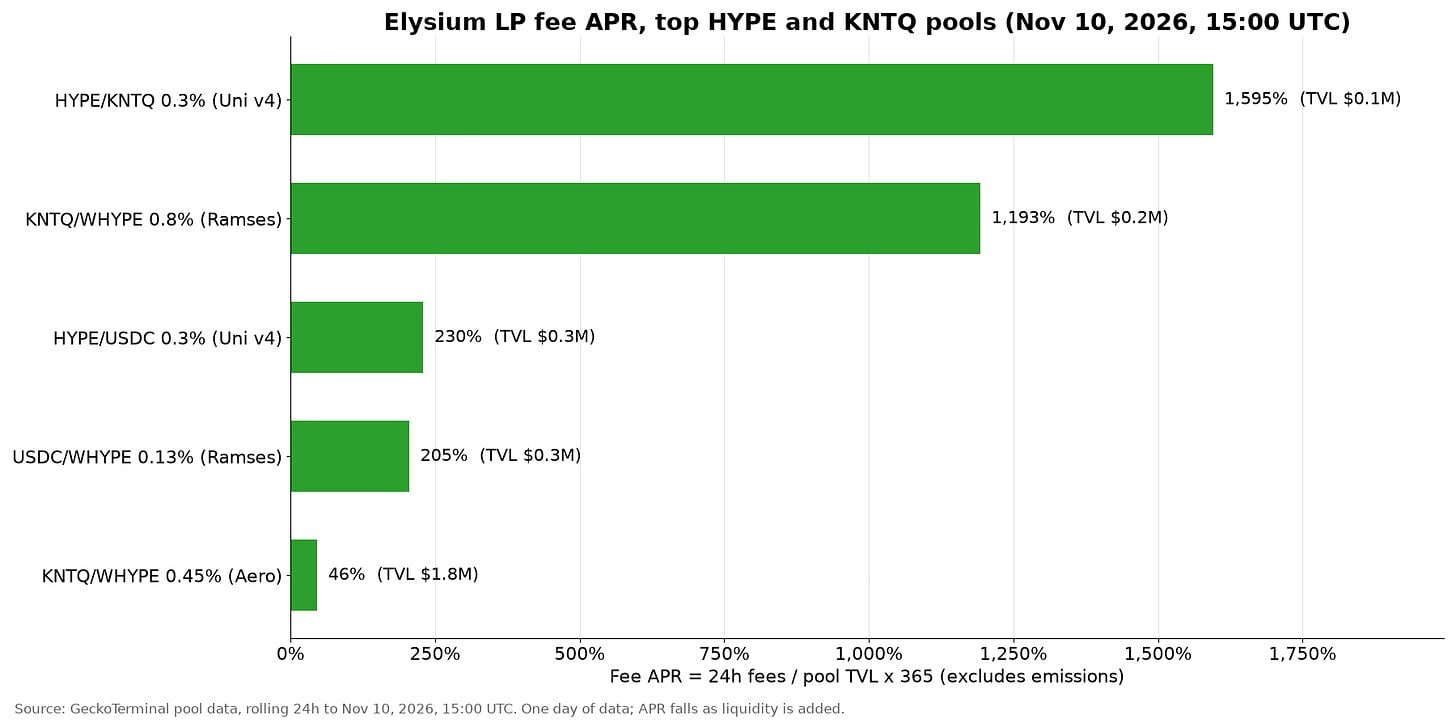
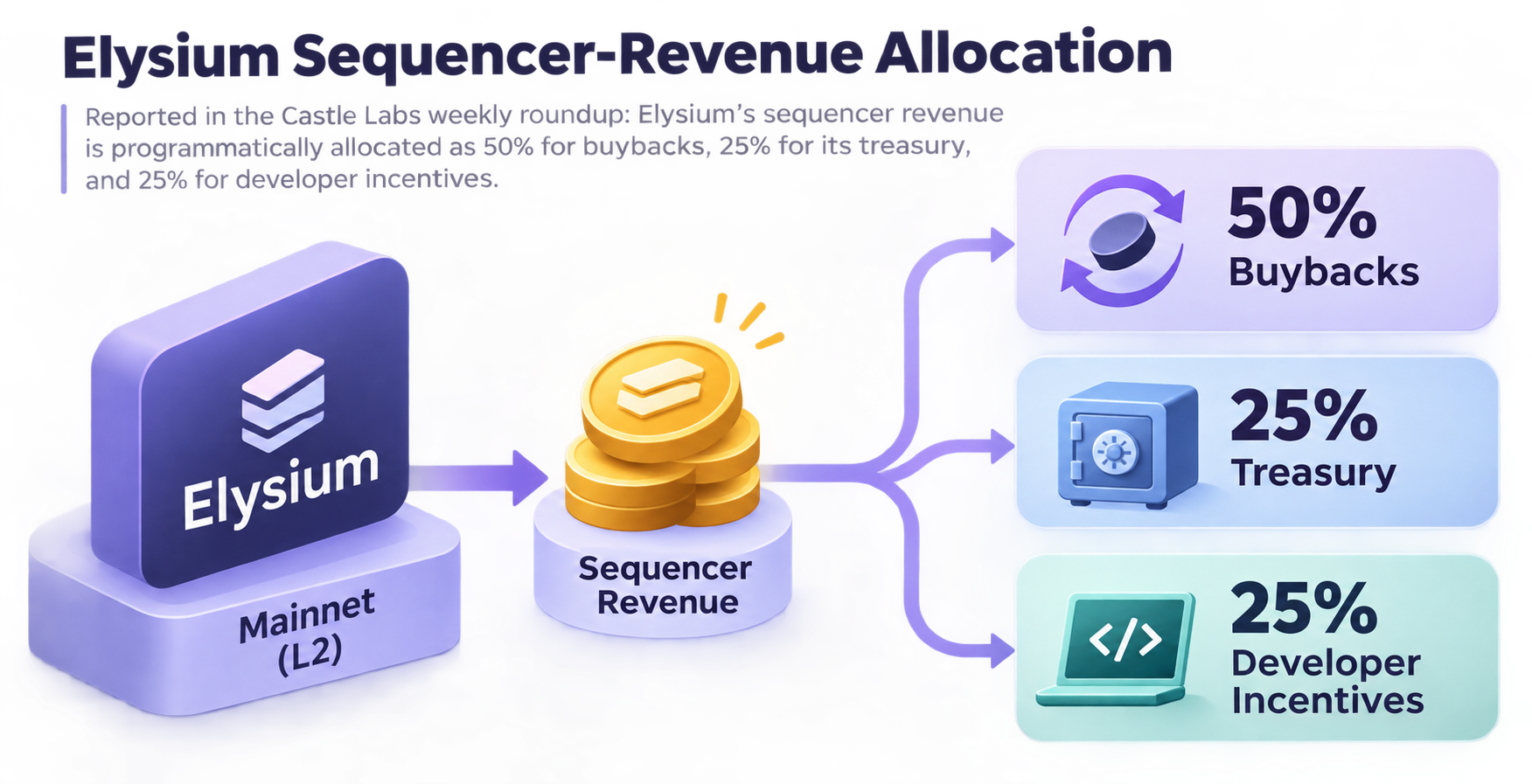
The report said Elysium’s mainnet had launched on November 10, with more than $50 million bridged to the network. Its accompanying breakdown put net inflows at $50.9 million, most of which remained in wallets rather than decentralized-exchange liquidity pools. Elysium’s stated sequencer-revenue allocation was 50% for buybacks, 25% for its treasury and 25% for developer incentives. Bridged funds show capital arriving; they do not, by themselves, establish sustained application use.

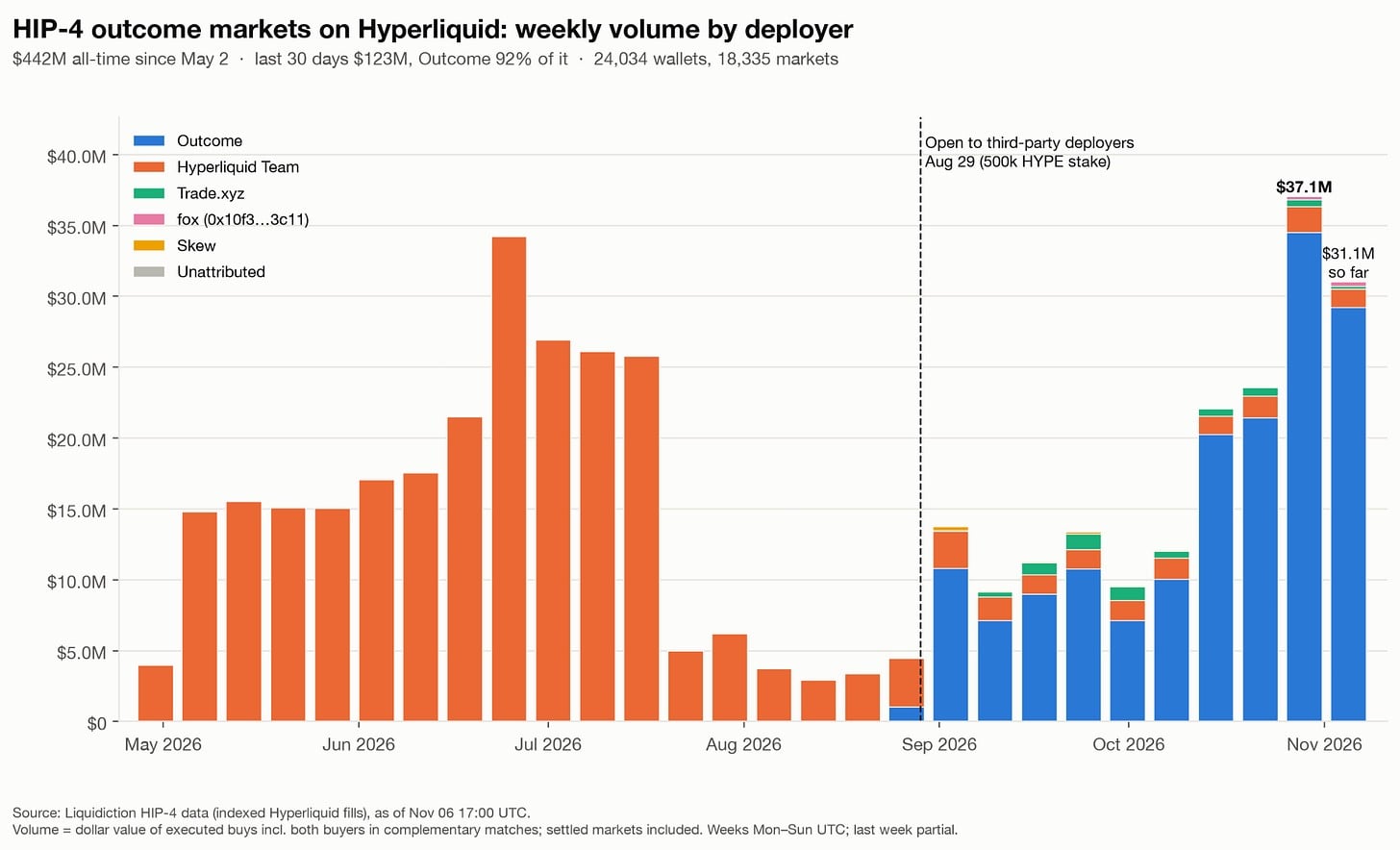
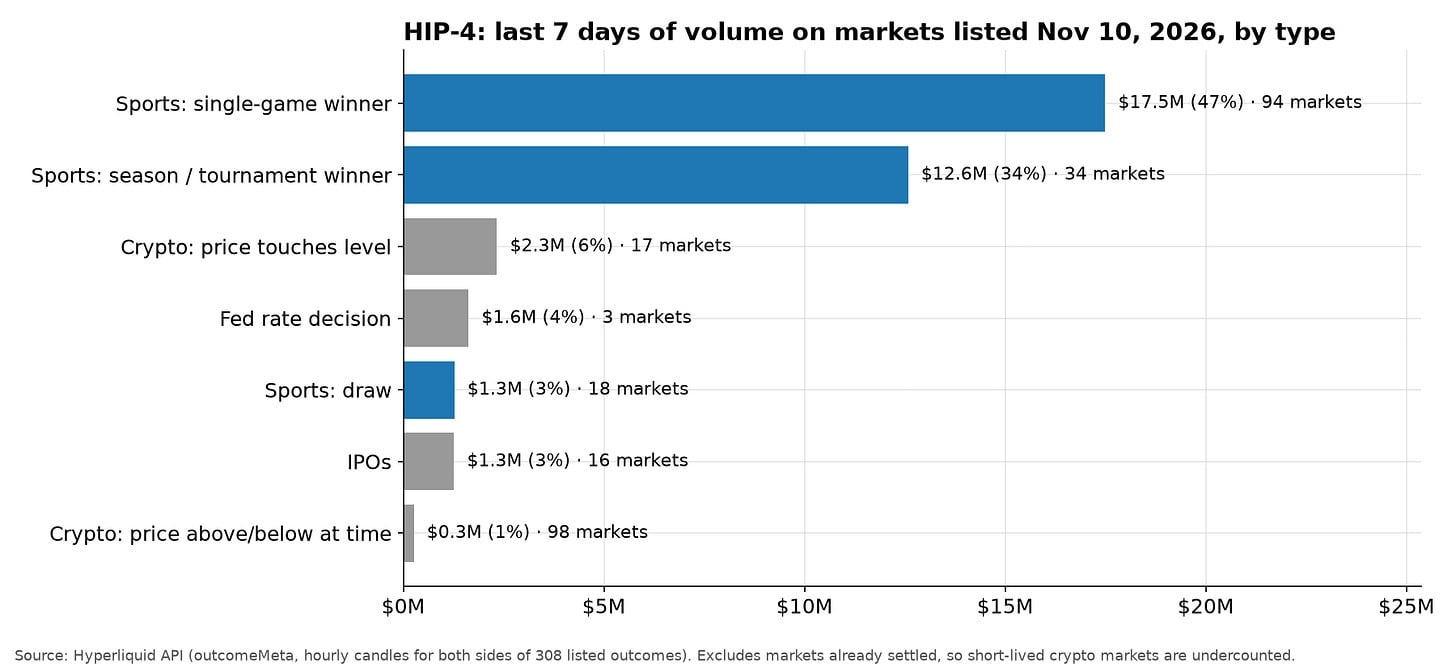
On Hyperliquid, the report described rising HIP-4 prediction-market volume after permissionless third-party deployment opened on August 29. It attributed much of that activity to leading deployers such as Outcome and said sports markets accounted for most volume in the seven-day breakdown as of November 10. The report also noted Outcome incentives, making it difficult to separate durable demand from reward-driven activity using that snapshot alone.
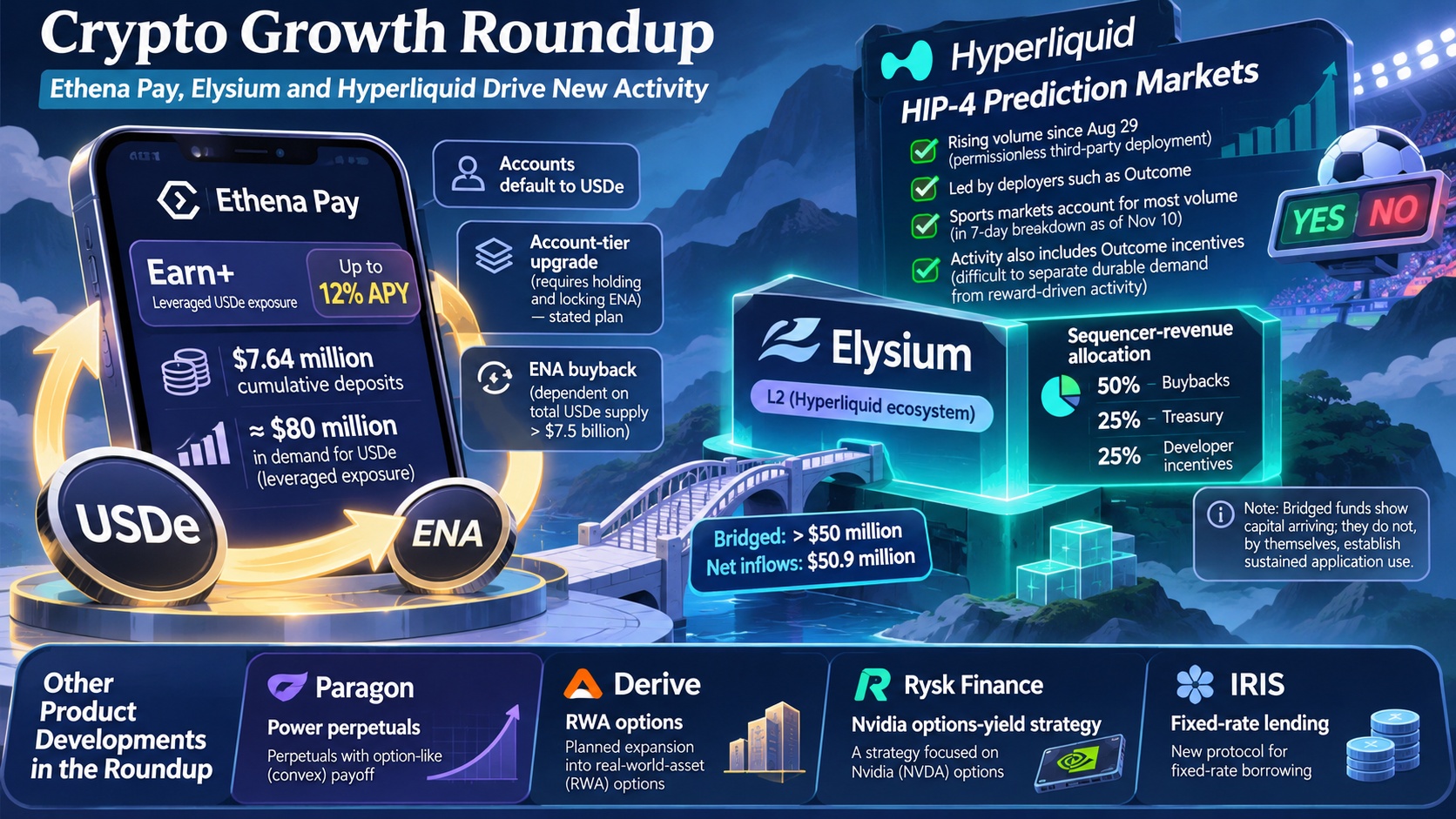
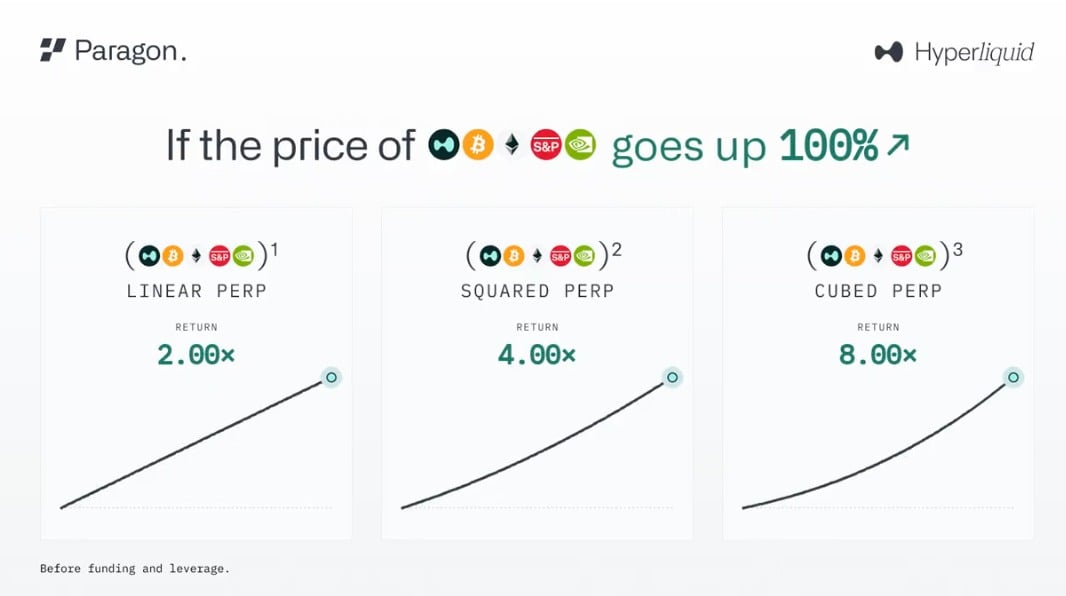
The same roundup covered Paragon’s newly launched power perpetuals, Derive’s planned move into real-world-asset options, an Nvidia options-yield strategy from Rysk Finance, and the launch of fixed-rate lending protocol IRIS. These are product developments, but the report did not provide comparable user or retention figures for them.
Source: techflowpost.com (originally published 2026-11-11 09:57 UTC+8)