Historical report: PANews published this account on November 12, 2026, at 19:00 (UTC+8). The index changes described below were scheduled to take effect after the November 30 close; this article does not establish what happened afterward.
MSCI confirmed that it would remove Bitcoin-treasury companies Strategy and Metaplanet from its indexes and place Ethereum-treasury company SharpLink Gaming on a watchlist. For crypto adoption, the immediate issue is not a change in network usage. It is whether companies that hold large amounts of crypto can continue to rely on index-linked demand for their shares—and what reduced demand might mean for their ability to raise capital.
Why the companies were classified differently
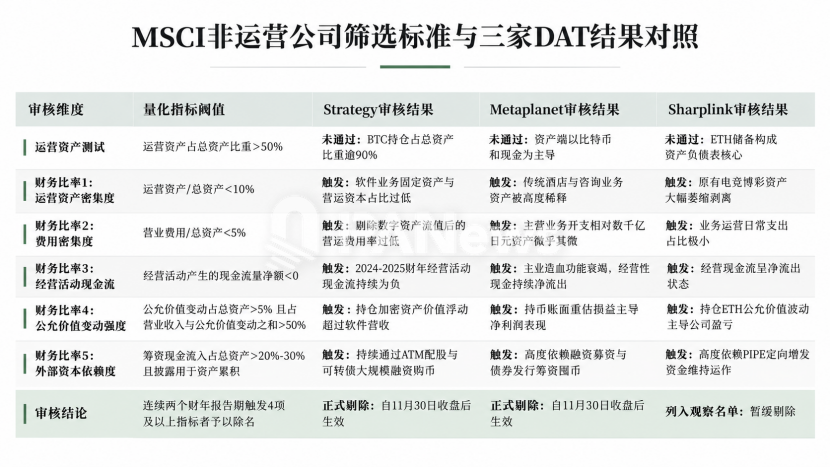
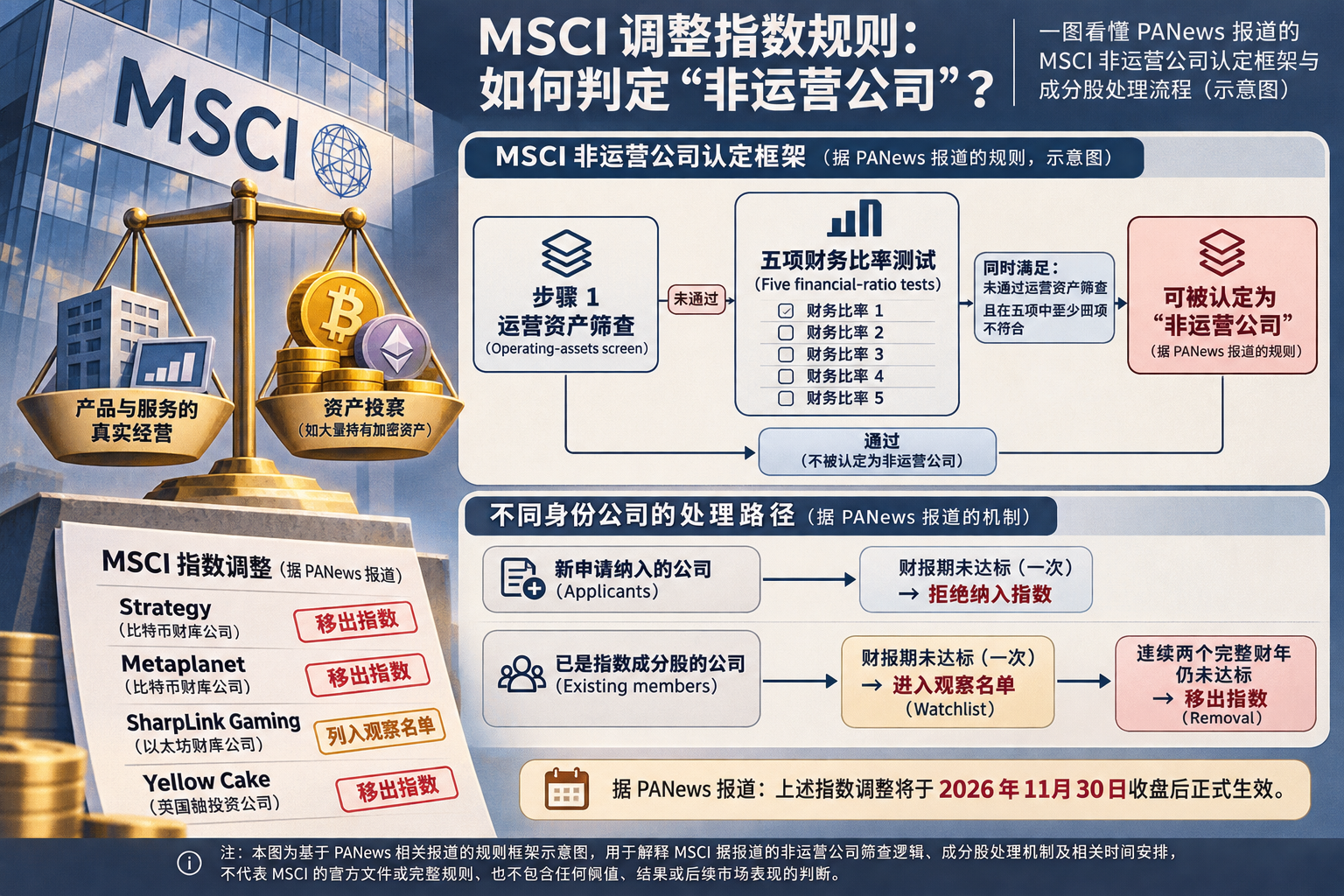
According to PANews, MSCI withdrew an earlier, crypto-specific proposal that would have excluded listed companies whose digital assets exceeded 50% of total assets. It instead finalized broader rules for non-operating companies on October 15, 2026, following a consultation begun in August. The framework combines an operating-assets screen with five financial-ratio tests: a company that fails the assets screen and at least four of the five ratios can be classified as non-operating.
The rules also distinguish between applicants and existing index members. A new applicant can be rejected after one failing reporting period; an existing member enters a watchlist after one and is removed only after failing across two full fiscal years. PANews says that distinction explains why SharpLink was placed on watch rather than removed. UK uranium investment company Yellow Cake was also removed, indicating that the decision was not confined to digital-asset treasuries.
PANews reported that Strategy held 850,364 BTC as of November 8, acquired for approximately $64.16 billion, while its enterprise-software revenue was $125.4 million in the third quarter of 2026. It said Metaplanet had accumulated 44,000 BTC. Strategy chair Michael Saylor criticized MSCI’s treatment of Bitcoin relative to other assets; Metaplanet CEO Simon Gerovich said the index change would not disrupt his company’s operations or Bitcoin strategy. Those are the executives’ positions, not evidence that the removals would have no financial effect.
Separating a selling estimate from a financing risk
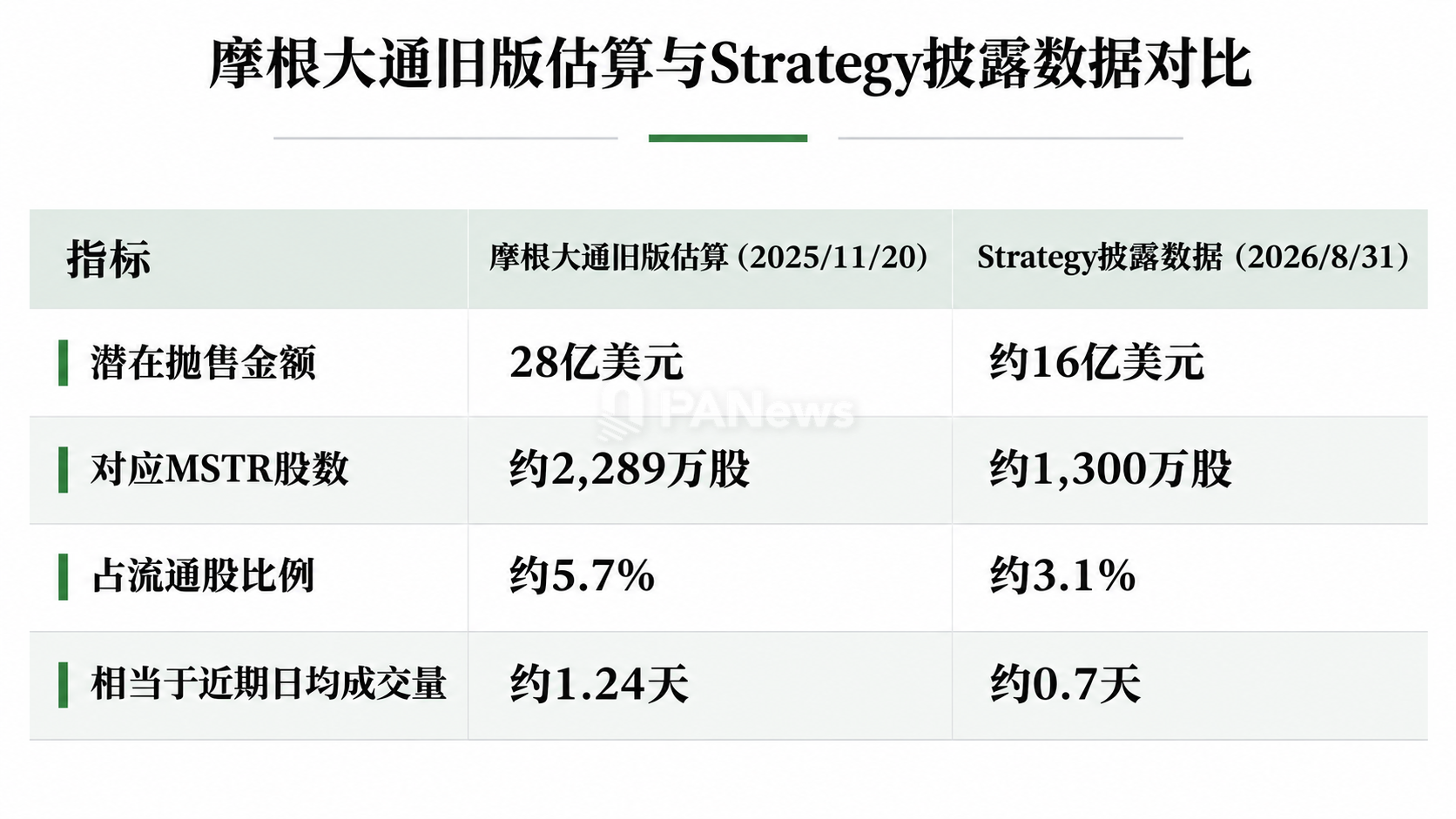
PANews cautioned against reusing JPMorgan estimates from November 2025: roughly $2.8 billion in potential passive selling if Strategy were excluded by MSCI, and up to $8.8 billion in outflows if other index providers followed. Those were conditional estimates made before subsequent changes in the stock and index holdings.
Using Strategy’s August disclosure of 13 million shares held by passive investors and its November 11 closing price of $122.35, PANews calculated a position worth about $1.59 billion. That is approximately 3.2% of its roughly 402 million shares outstanding and 0.7 days of its recent average daily trading volume of 18.49 million shares. The calculation describes potential shares to change hands, not a confirmed sale or a forecast of the price impact.
The longer-term question is whether weaker share demand would make Strategy’s equity issuance less effective as a way to fund Bitcoin purchases. PANews put its market-to-net-asset-value ratio at 1.08 at the time of reporting and noted that Strategy itself had warned index exclusion could hurt its share price, liquidity and future financing capacity. A narrower premium could make new issuance more dilutive; the source does not establish that this outcome is inevitable.

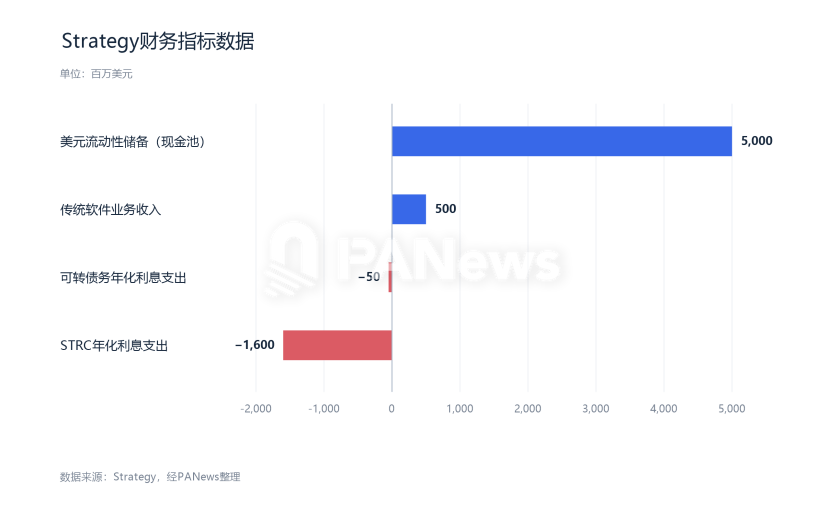
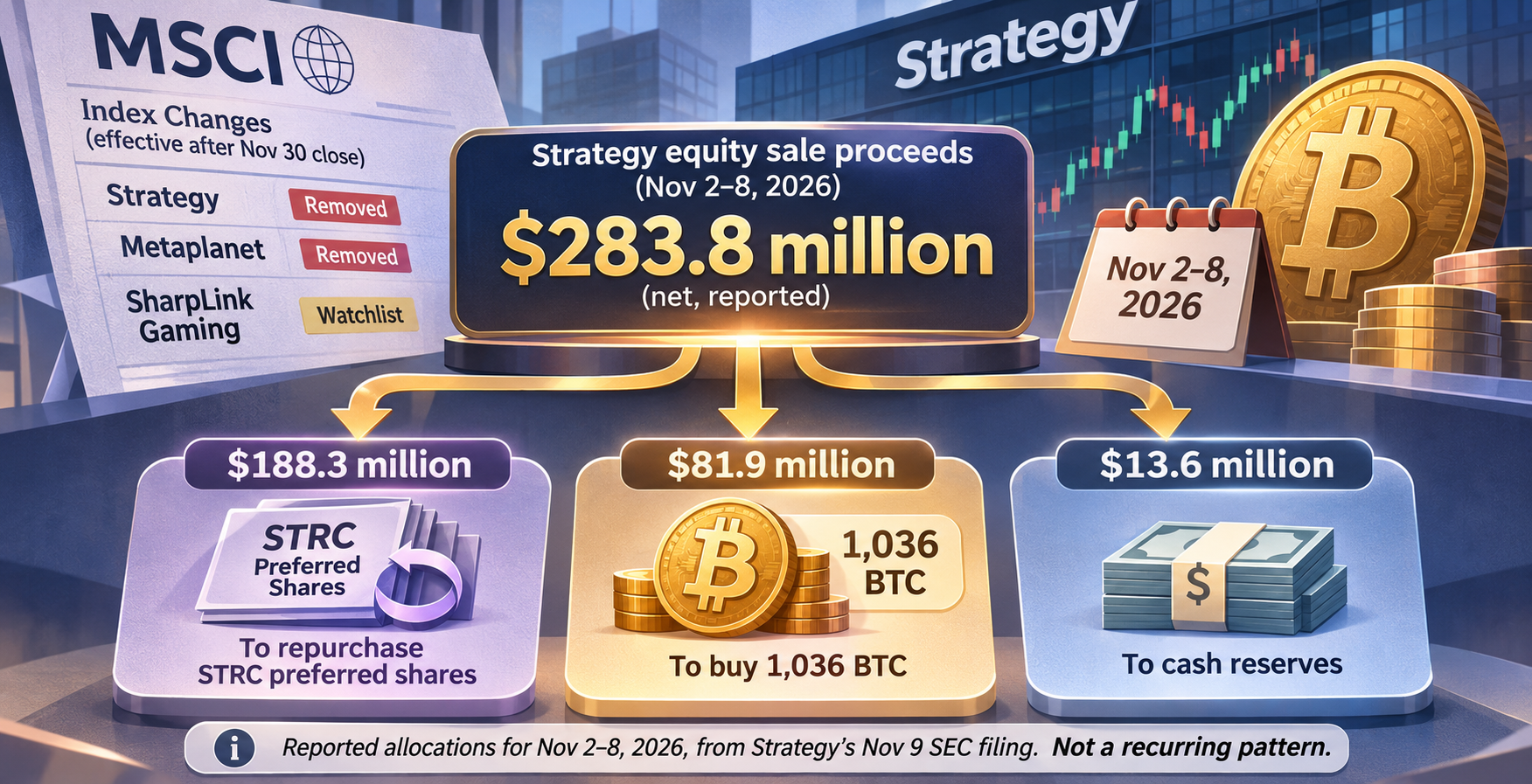
PANews also cited Strategy’s November 9 SEC filing: between November 2 and 8, the company raised about $283.8 million net from selling approximately 2.05 million common shares. Of that, $188.3 million went to repurchase STRC preferred shares, $81.9 million to buy 1,036 BTC, and $13.6 million to cash reserves. The split shows that capital raised in that period served purposes beyond Bitcoin accumulation.
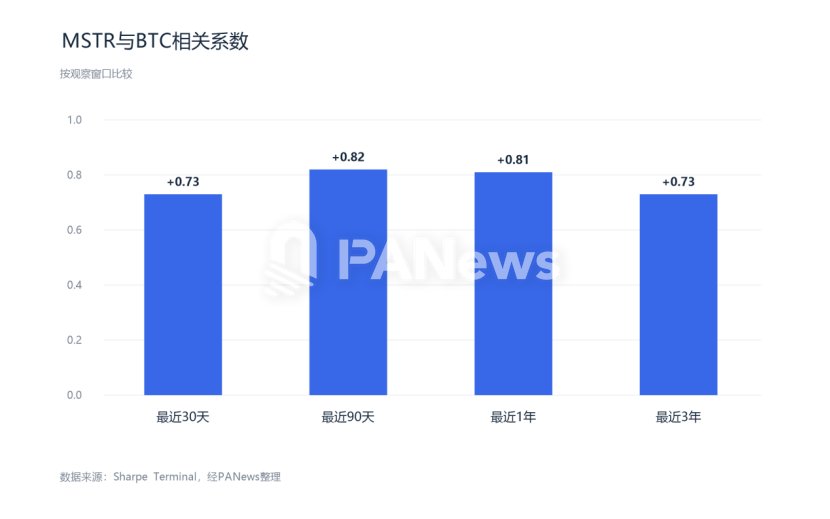
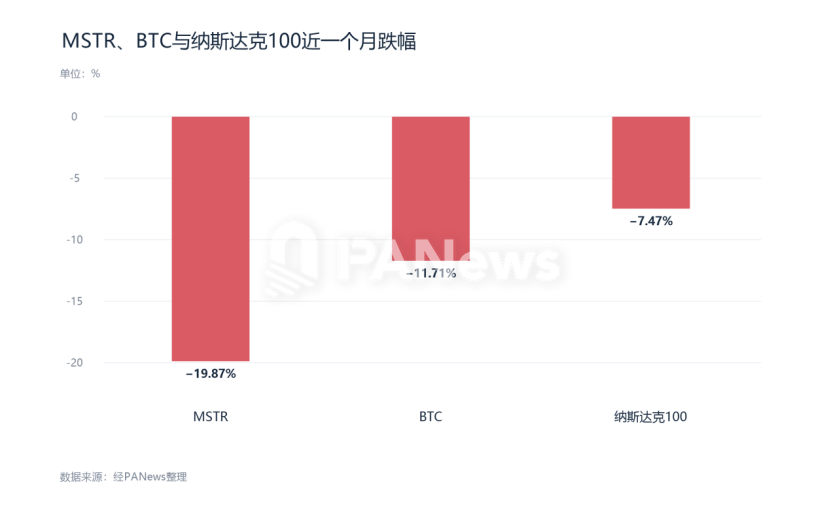
PANews argued that Strategy’s reported cash reserves and debt schedule reduced the likelihood of an immediate forced Bitcoin sale. That is a separate question from its share-price risk. The article reported that Strategy shares fell from $151.29 on October 15 to $122.35 on November 11, while Bitcoin fell by less than 10% over the same interval. The difference does not, by itself, prove how much of the stock’s decline the MSCI decision caused: Strategy shares also reflect financing, dilution and valuation risks that do not apply to Bitcoin in the same way.
Source: panewslab.com (originally published 2026-11-12 19:00 UTC+8)