
A November 17, 2026 account of Solana’s Breakpoint conference in London described a shift in emphasis: alongside developer projects, the event featured banks, remittance providers and tokenized securities. Those examples point to more ways institutions might use the network. They do not, on their own, establish how many people use those services regularly.
Network changes and institutional connections
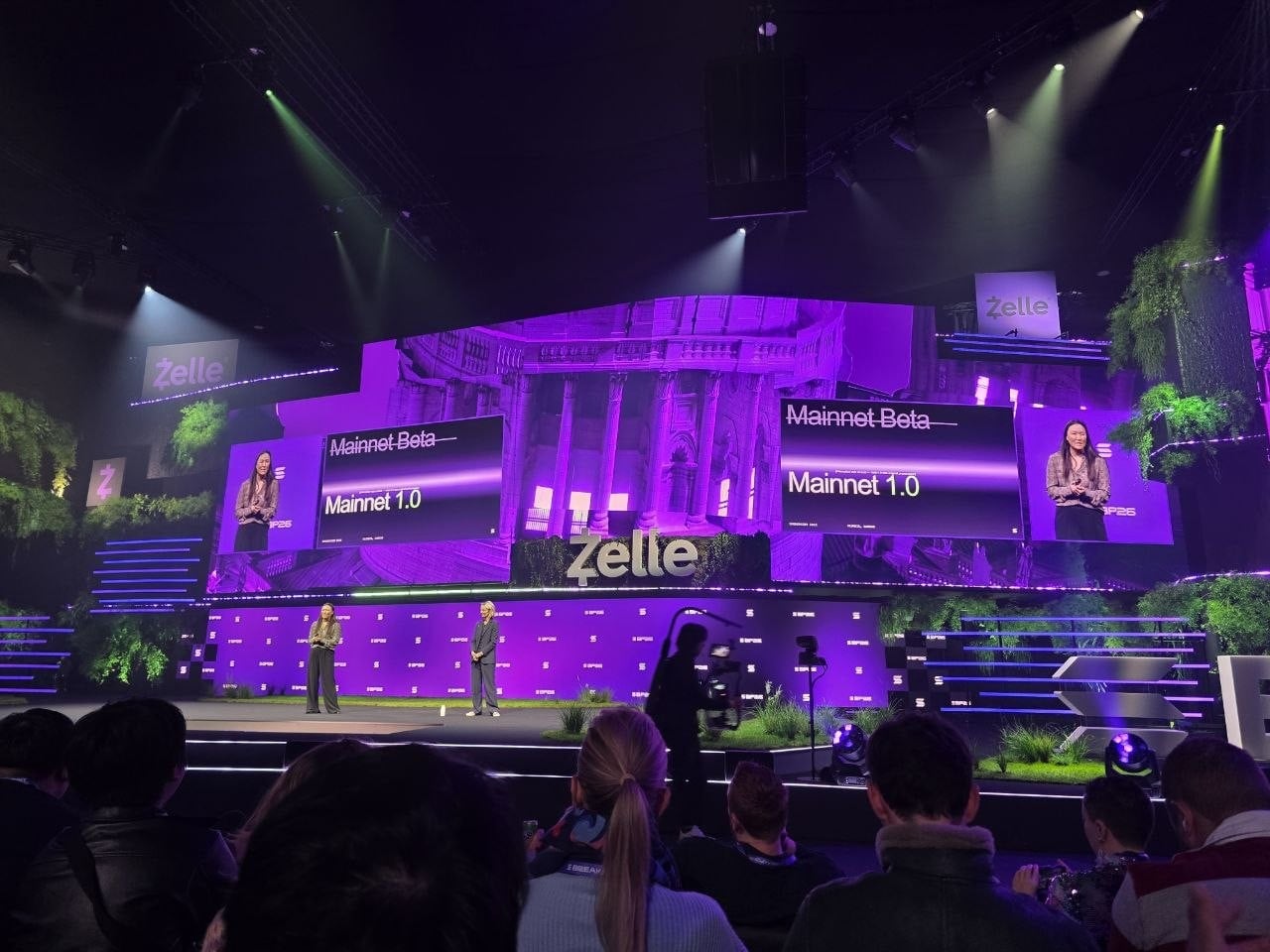
At the conference, Solana Foundation president Lily Liu announced that Solana’s mainnet was moving from Beta to version 1.0, according to the report. Beta had launched in March 2020. The account also said an upgrade activated on October 9, 2026, at Epoch 1053 doubled block-production opportunities from 2.5 to five per second, while Alpenglow brought transaction finality down to 150 milliseconds. These are reported network-performance measures, not user-growth figures.
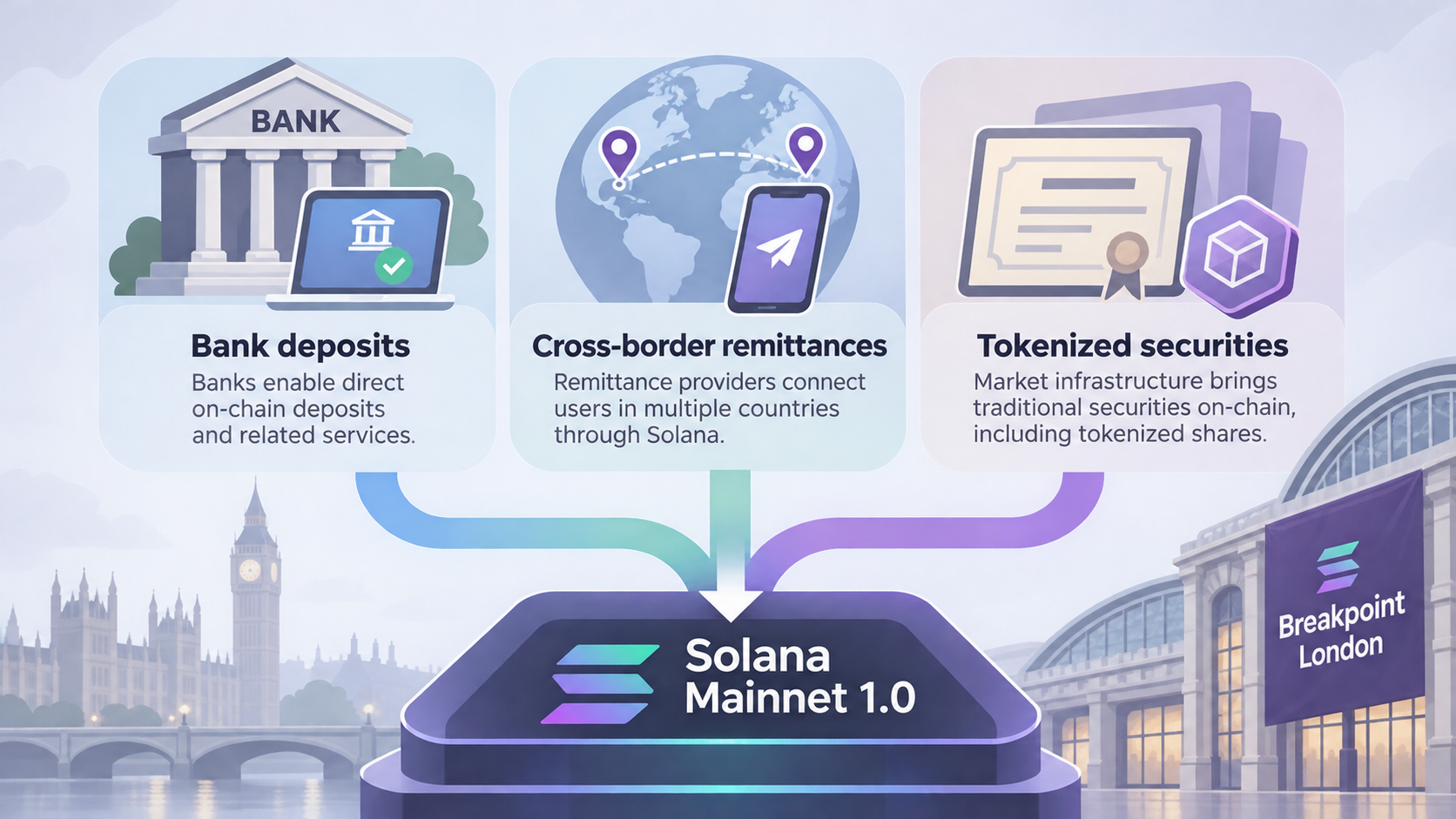
The report gave several examples of institutional involvement. It said SoFi enabled direct on-chain Solana deposits in February 2026, introduced SoFi Big Business Banking in April and issued the SoFiUSD stablecoin in May. MoneyGram became a Solana validator in June and launched MoneyGram Ramps in August; the account said users in 170 countries could make cross-border transfers through Solana. It also reported that Bullish acquired transfer agent Equiniti for $4.2 billion and had tokenized 151 million shares on Solana. These examples describe services and infrastructure, but the account did not provide active-user or transaction-retention figures for them.

Trading volume is not a user count
The report put monthly trading volume for tokenized stocks on Solana above $10 billion and claimed a 95% global market share. It did not specify the month, the market-share denominator or a comparison period, so those figures cannot show how quickly adoption grew. It also cited an October record of $5 billion in total value locked in real-world assets, without establishing whether that level persisted.
For DeFi, the account reported more than $2 trillion in cumulative aggregated DEX trading volume and $1.7 billion in total value locked for Jupiter, alongside $1.16 billion in total value locked for lending protocol Kamino. Cumulative volume measures activity over time; value locked is a snapshot. Neither is a count of distinct users.
Breakpoint’s reported developments show a broader range of proposed and operating uses for Solana. The unanswered adoption question is whether those connections produce sustained use beyond conference announcements, product launches and trading-volume milestones.