Cointelegraph reported on November 11, 2026 that short-term Bitcoin holders had sent coins to exchanges while those coins were worth less than their purchase price, as Bitcoin fell to an 11-week low. The figure is an onchain coin-flow reading from CryptoQuant, not a count of users and not a retention rate.
Size, window, and comparison
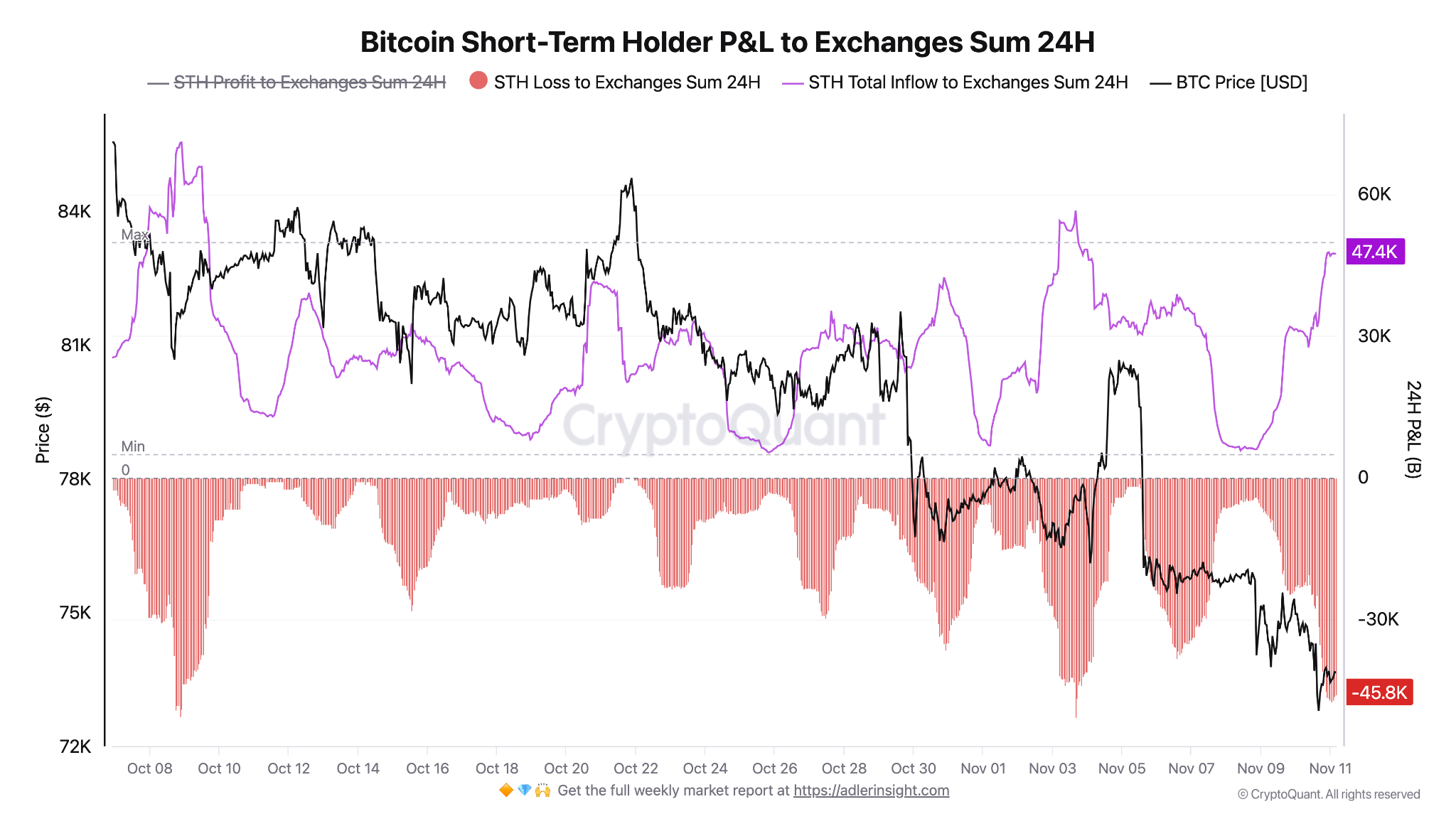
CryptoQuant data showed short-term holders sent 47,025 BTC carrying unrealized losses to exchanges in the 24 hours to midnight UTC at the start of Wednesday. Cointelegraph described the move as more than 47,000 BTC on Tuesday. Over that same stretch Bitcoin dropped to $72,670, its lowest level since August 20.
That 24-hour total was the third-highest since July and among the largest daily totals in the four months of data CryptoQuant was tracking for the series. The largest 24-hour inflows of BTC carrying unrealized losses since late July came on October 8, hours after Bitcoin fell back to $80,000. Rolling 24-hour inflows then peaked at 50,500 BTC.
On November 10, CryptoQuant said profitable transfers stood near 1,700 BTC, “meaning approximately 27 BTC arrived at a loss for every 1 BTC transferred at a profit.” That ratio describes the mix of transfers in the window. It does not say how many people sent the coins, whether the same addresses had moved coins before, or whether the bitcoin was sold, left on the exchange, or later withdrawn.
What “short-term holder” covers here
CryptoQuant’s short-term holder metric tracks Bitcoin held for up to 155 days. Analysts generally treat that cohort as more likely to sell when prices fall, including at a loss. That is a holding-period definition plus a common behavioral assumption. One day of exchange inflows does not measure how many of those coins stay on exchange, how long any seller had been active, or whether network use is growing.
Cost basis and unrealized profit or loss
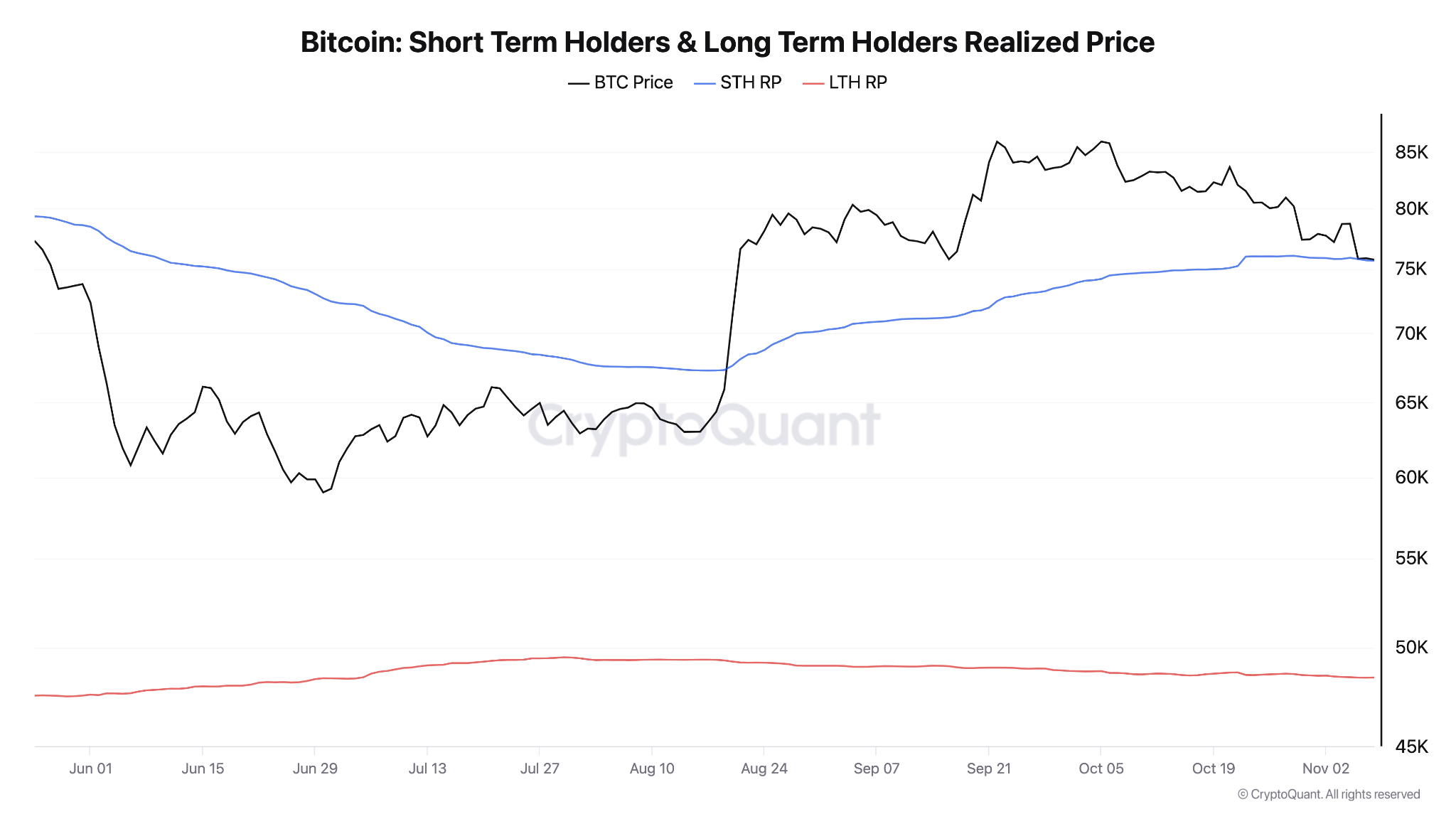
Cointelegraph had previously reported that short-term holders’ average cost basis was around $75,700. The $72,670 print sat below that level.
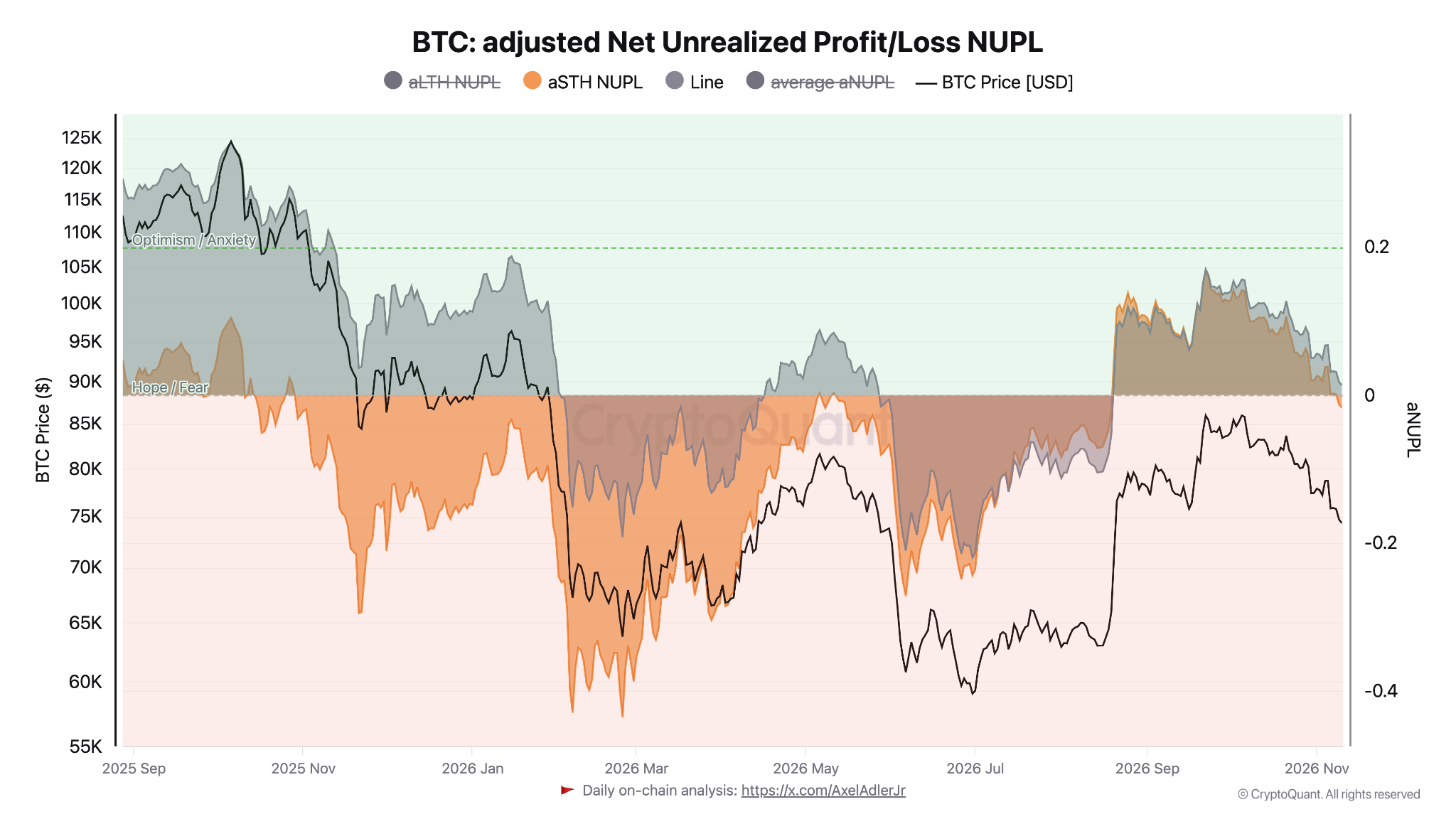
The cohort moved into an aggregate unrealized profit on August 20 as Bitcoin rebounded toward $80,000, then slipped back into an aggregate unrealized loss on Friday. CryptoQuant’s net unrealized profit/loss (NUPL) metric showed short-term holders at their highest unrealized profitability since November 2025 as Bitcoin climbed to $87,200 in September. Those are cohort-level snapshots of unrealized profit and loss. They are not evidence of who held through the moves.
A conditional downtrend reading, not a completed outcome
Julio Moreno, CryptoQuant’s head of research, wrote on Monday that Bitcoin could still be in the downtrend that began in November 2025. “If rallies keep stalling near the cohort’s cost basis and net unrealized losses deepen, the August rebound starts to look like a pause in the broader downtrend,” he wrote. “A sustained break below $73,000 followed by a failed retest from below would strengthen the case for bear-market continuation.”
Those statements depend on later trading around $73,000 and near the cohort cost basis. The November 11 report does not treat them as already confirmed, and the exchange-inflow total is not itself a forecast of how long any selling lasts.
Cointelegraph’s related link referred to stock ETF buyers buying a dip as Bitcoin funds bled $1.6 billion. That figure is separate from the 47,025 BTC short-term holder flow and is not broken down in this report.
Original article: Bitcoin short-term holders send 47K BTC to exchanges at a loss, Cointelegraph, November 11, 2026.