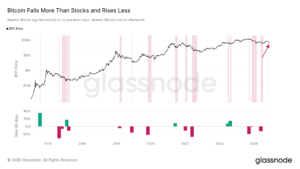
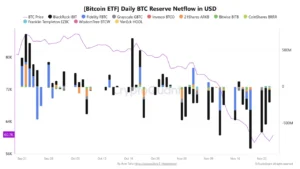
Bitcoin traded at $58,506 at 11:50 a.m. EST on November 25, 2026, down about 27% for the month. It had briefly fallen to $57,300 after the release of October’s US inflation figures. Investors had withdrawn $4.9 billion from US spot Bitcoin exchange-traded funds so far in November, with BlackRock’s IBIT accounting for the largest redemptions.
Leveraged demand and a smaller stablecoin supply
Bitfinex Alpha said leveraged positions were driving more of Bitcoin’s demand than unleveraged spot purchases. It pointed to rising open interest and positive funding rates even as ETF investors withdrew money and short-term holders sold into stock market rallies. In its assessment, that combination left the market vulnerable to a cascade of forced liquidations.
The supply of dollar-backed stablecoins fell from above $300 billion in early October to about $280 billion on November 25, a contraction of more than $20 billion, according to DefiLlama. Georges Chouchani, founder and CEO of Euclid, said supply had shrunk every week in November. He viewed a return to growth as an early signal that liquidity was coming back. The measure tracks the dollar value of stablecoins outstanding, not the number of people using them.
Inflation meets expectations as Bitcoin tracks Nvidia
The Bureau of Economic Analysis reported that the core Personal Consumption Expenditures price index, the Federal Reserve’s preferred inflation gauge, rose 0.3% in October from September and 3.3% from a year earlier. Both figures matched economists’ expectations. Headline inflation reached 3.8% year over year.
Bitget analyst Lewis Huang said Bitcoin’s November 23 rebound and subsequent retreat below $60,000 had tracked Nvidia, which fell about 6% on November 24 after rallying on Jensen Huang’s return. Huang saw AI stocks as more relevant to Bitcoin’s near-term direction than the inflation release and cautioned that thin holiday trading could amplify moves either way. He identified the November 21 low near $55,000 as a level to watch and said a recovery above $60,000 would likely require ETF selling to ease.
The October figures were the last major inflation update before the Fed’s December meeting. CME FedWatch data still showed traders expecting a 25-basis-point rate increase, though the implied probability of a pause had risen. Chouchani identified the December 4 jobs report as the final major test before the decision.