Coinbase’s dedicated Aave V4 lending market on Base held about $19 million in tokenized US stocks as collateral, roughly 40% of the value of Coinbase stock tokens in circulation, according to SeaLaunch’s November 25, 2026 analysis. The market had lent a cumulative $8.3 million in USDC since its late-September launch. That figure measures lending over time, not debt outstanding on the reporting date.
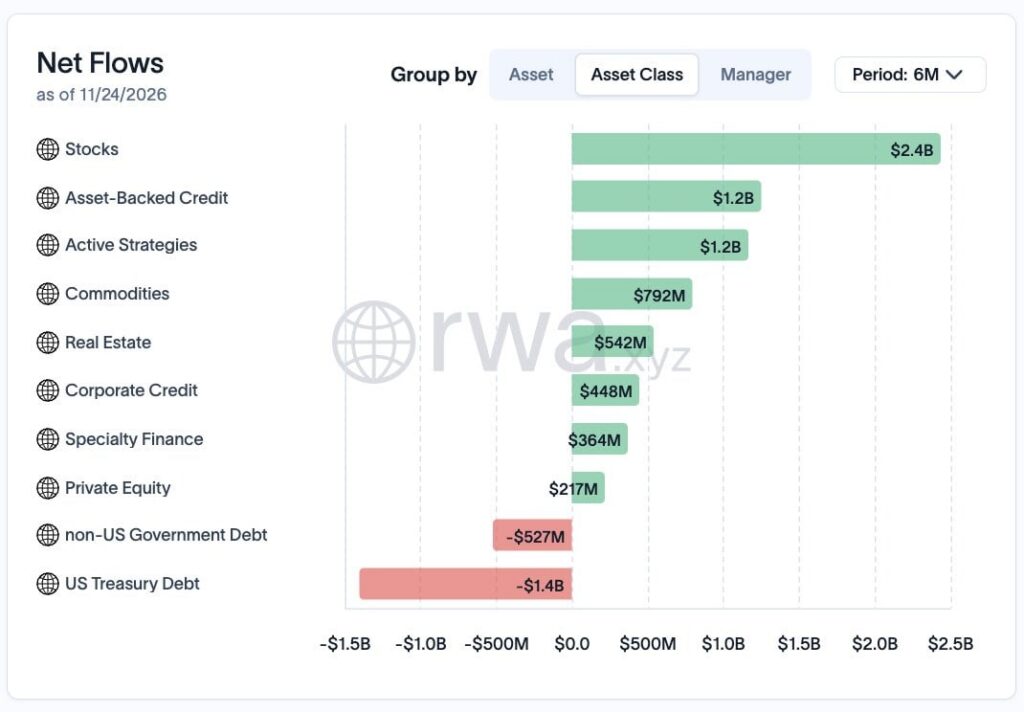
The collateral figure captures a different kind of adoption from fund flows. Across issuers, tokenized stocks recorded $2.4 billion in net inflows over the six months covered by the analysis, the most of any real-world asset category tracked by rwa.xyz. Tokenized US Treasuries saw $1.4 billion in net outflows over the same period. Coinbase’s lending data shows what some holders did with their stock tokens after acquiring them: they borrowed against the shares rather than selling them.
Nearly 400 stocks and ETFs, but eight accepted as collateral
Coinbase launched its stock tokens on Base in August 2026. Within three months, their total onchain value reached $45 million across nearly 400 US stocks and ETFs, with more than 97,000 distinct holders. SeaLaunch described each token as a beneficial claim on underlying shares held one-for-one by a regulated, bankruptcy-remote custodian, separate from Coinbase’s operating assets. Holders can use the tokens in DeFi from self-custody wallets.
The four largest tokens by value were NVDAc (Nvidia) at $10.9 million, GOOGLc (Alphabet) at $10.4 million, METAc (Meta) at $5.4 million and SPCXc, described as a SpaceX-related token, at $4.2 million.
The Aave V4 market accepted eight stock tokens as collateral. A single pool, the hub, supplies USDC to borrowers across all eight. Each stock has a separate spoke that sets how much holders can borrow against it, how much the market will accept in deposits and when a position becomes subject to liquidation. Adding a stock therefore does not require finding a new group of USDC lenders for it. Loans have no fixed maturity, but borrowers must keep their loan-to-value ratios within the applicable limits.
Collateral was concentrated in GOOGLc ($6 million), NVDAc ($5.1 million) and METAc ($3.7 million). Nvidia’s token was closest to its deposit cap, at 73%, compared with 54% for GOOGLc and less than 30% for each of the other tokens. These percentages measure how much room remained for deposits, not how close borrowers were to liquidation.
Who was borrowing against the shares?
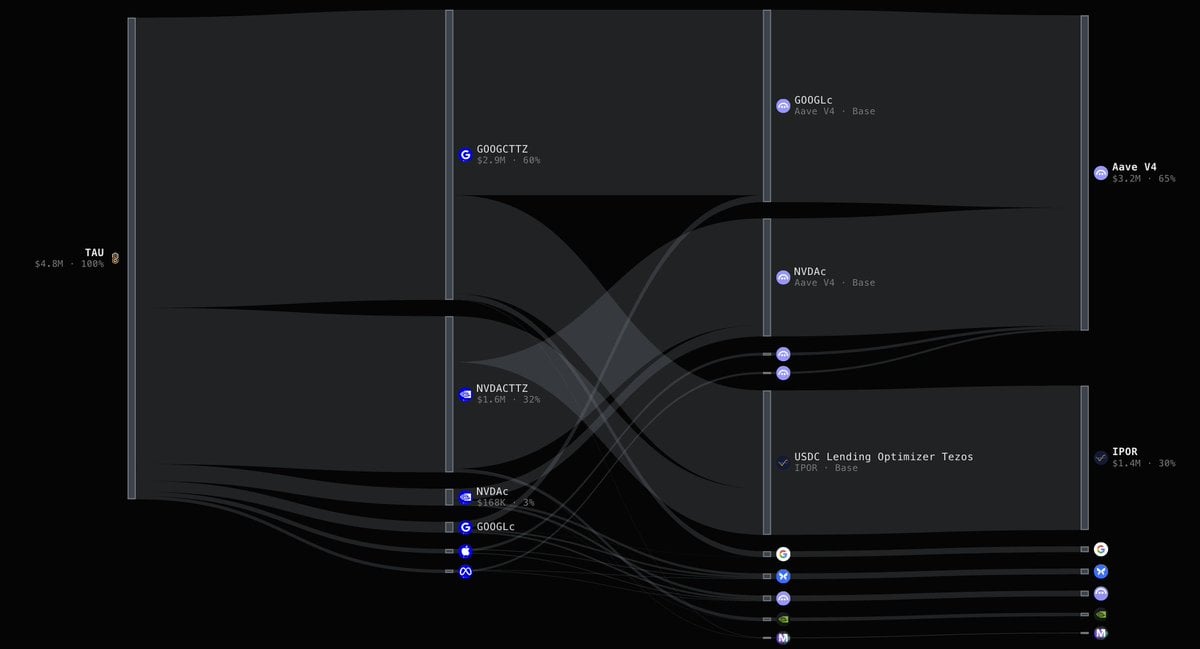
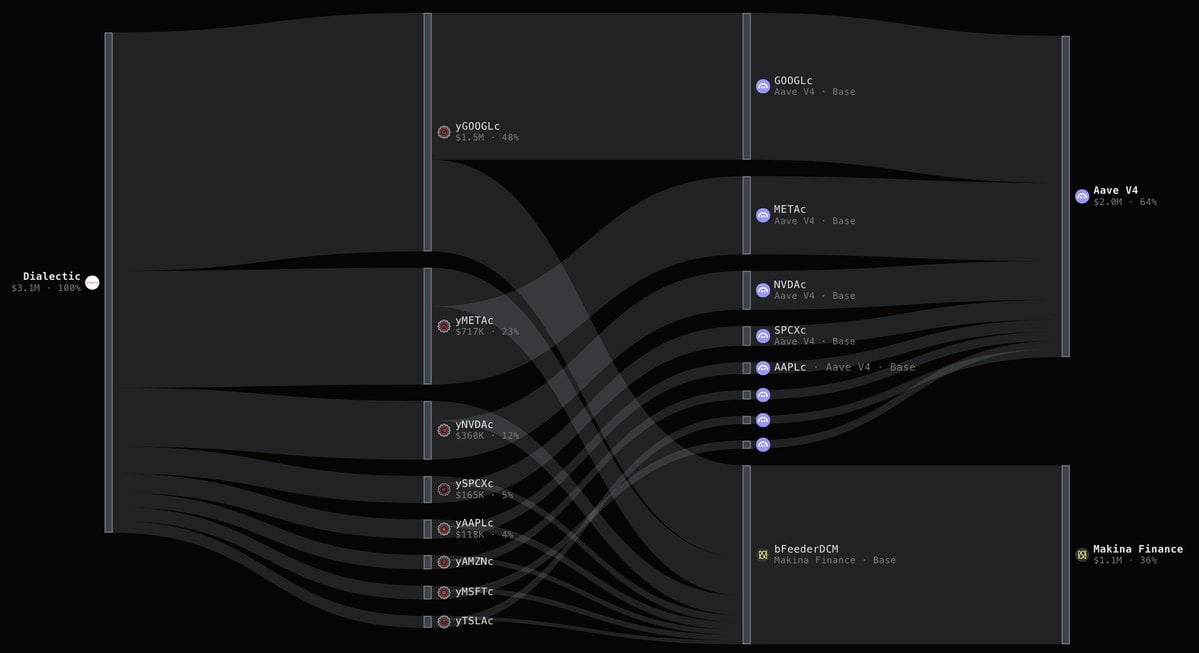
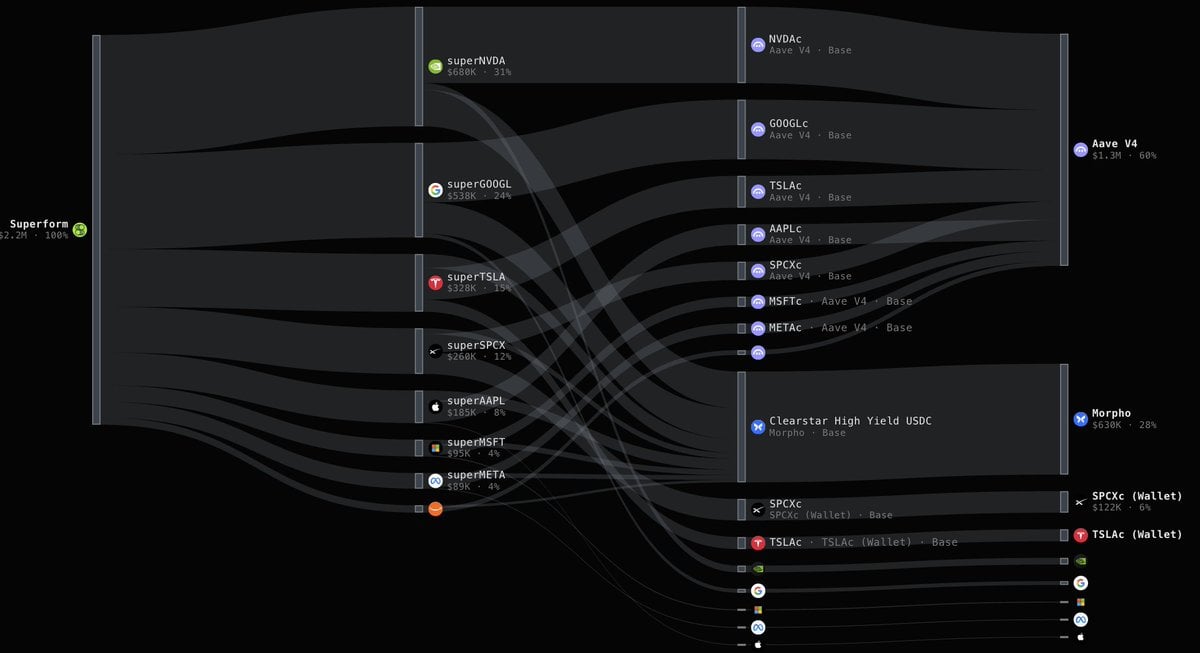
SeaLaunch identified managed vaults as the main driver of borrowing. Three managers oversaw about $10 million across 22 stock-token vaults and together supplied nearly one-third of the hub’s stock collateral. The $10 million includes assets deployed outside Aave; it is not all pledged stock.
The managers used a similar strategy: pledge stock tokens, borrow USDC and deploy the proceeds elsewhere. Vault investors retain exposure to the underlying share price. Whether the borrowing adds income depends on the difference between the return on the USDC and the cost of the loan.
| Manager | Assets managed | Reported allocation |
|---|---|---|
| 628 Labs (IPOR) | $4.8 million | Primarily Google and Nvidia vaults; 65% in Aave V4 collateral and 30% in IPOR’s USDC Lending Optimizer. |
| Dialectic Group | $3.1 million | Eight vaults, led by the $1.5 million yGOOGLc vault; 64% pledged on Aave V4 and 36% deployed through Makina Finance. |
| Superform | $2.2 million | Eight vaults, led by the $680,000 superNVDA vault; 60% in Aave V4 collateral and 28% in Clearstar’s USDC vault on Morpho. |
A separate strategy was still in development. Keyring was working with Bitget and its real-world asset platform, Reality, on an equity-basis index. The design pairs a leveraged holding of Reality stock tokens in a permissioned lending market with an equally sized short position in equity perpetuals on Hyperliquid. Unlike the Aave vaults, the index aims to offset share-price exposure. Its intended return depends on funding payments from long traders exceeding financing costs; the analysis did not report realized returns.
The clearest evidence of use on Base is the $19 million pledged, not the holder count alone. The roughly 40% collateral share is a share of stock-token value, not the proportion of holders who took out loans. With managed vaults accounting for nearly a third of collateral, the snapshot shows meaningful use by strategy managers without establishing how widely individual holders borrowed or how many returned to borrow again.