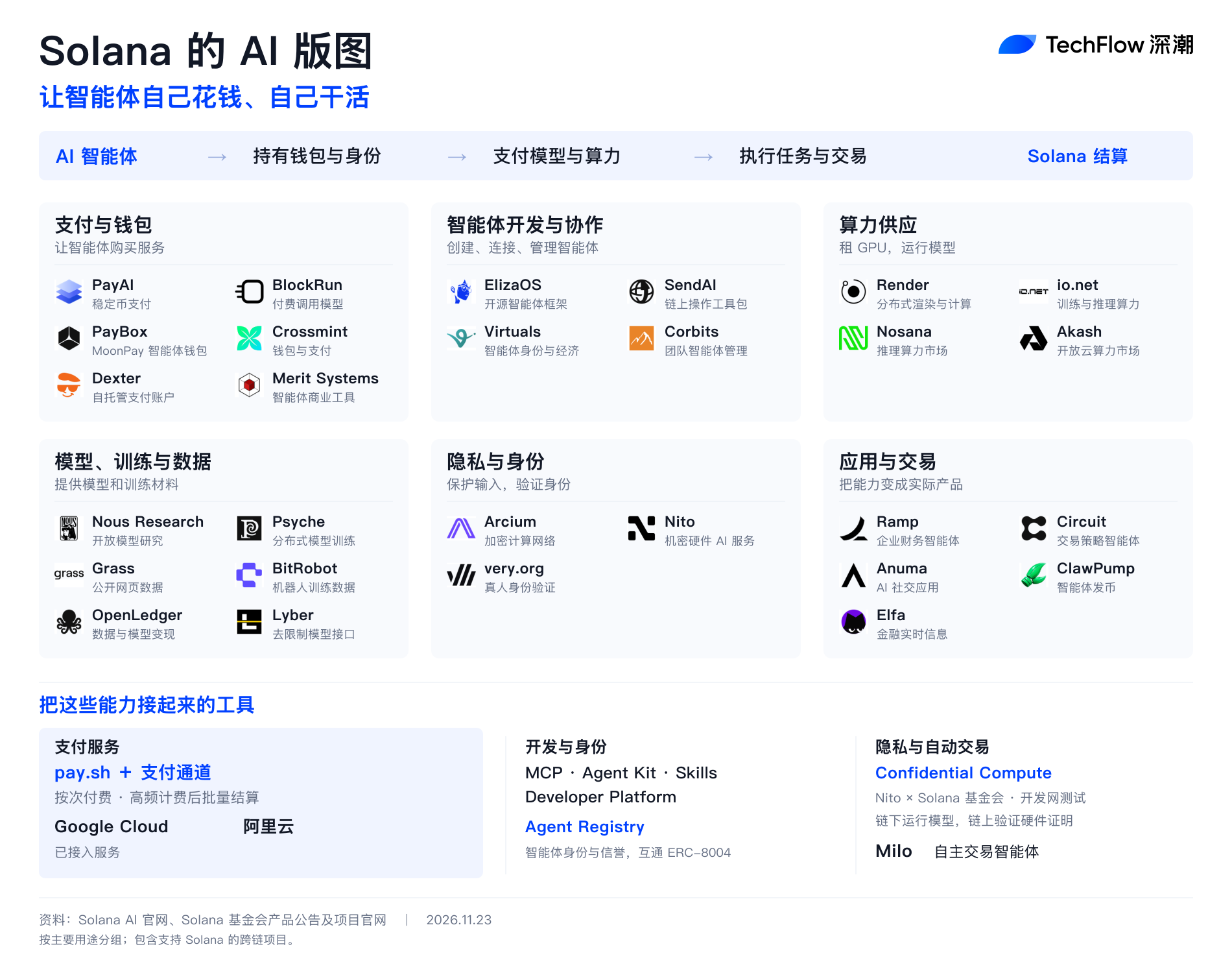
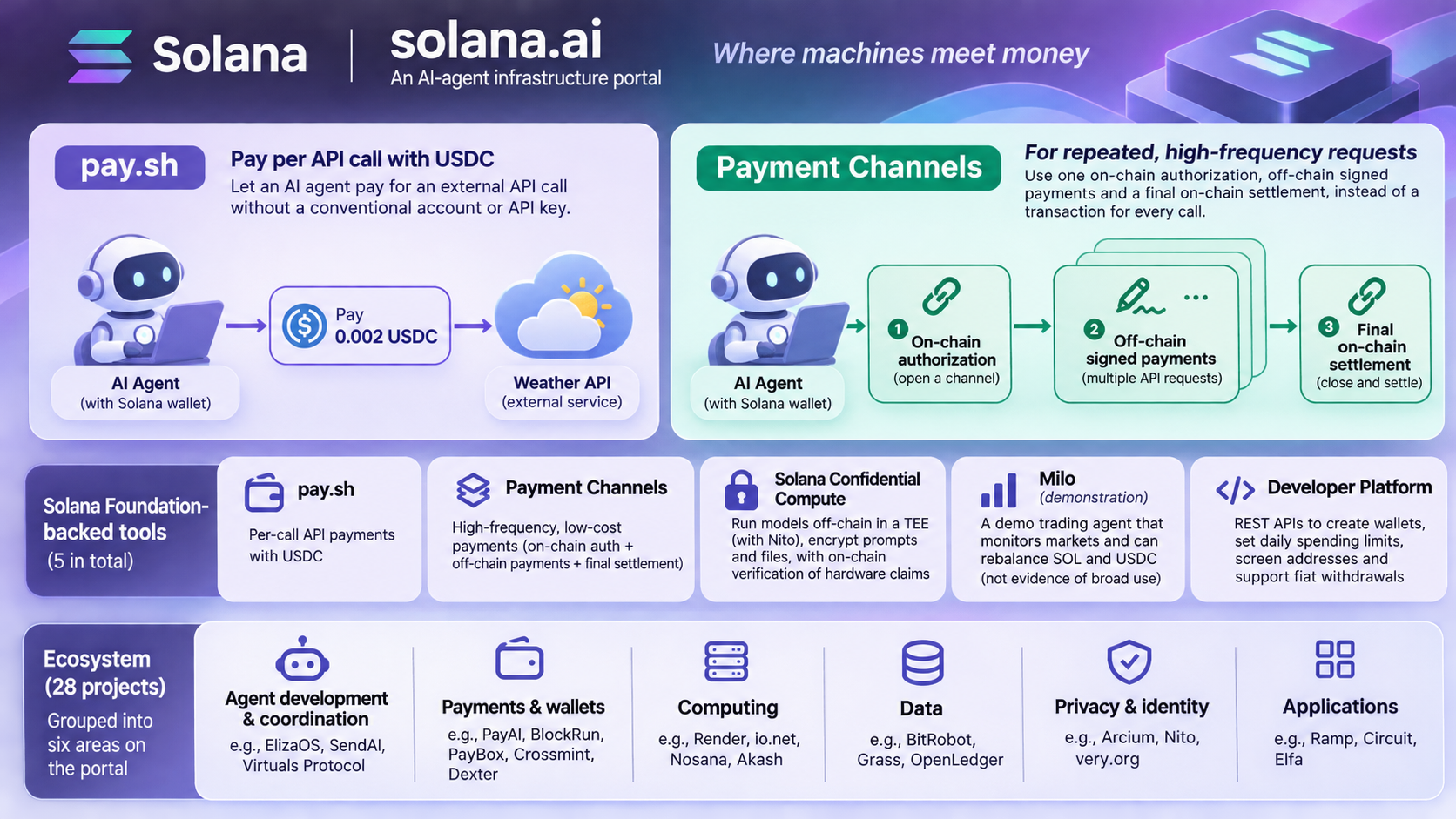
As reported on November 23, 2026, the Solana Foundation had launched solana.ai, a portal for AI-agent infrastructure. It presented five Foundation-backed tools and organized 28 ecosystem projects across areas including payments, computing, data and applications. The portal’s stated positioning—“Where machines meet money”—puts payments and settlement at the center of the effort.
What the tools are meant to do
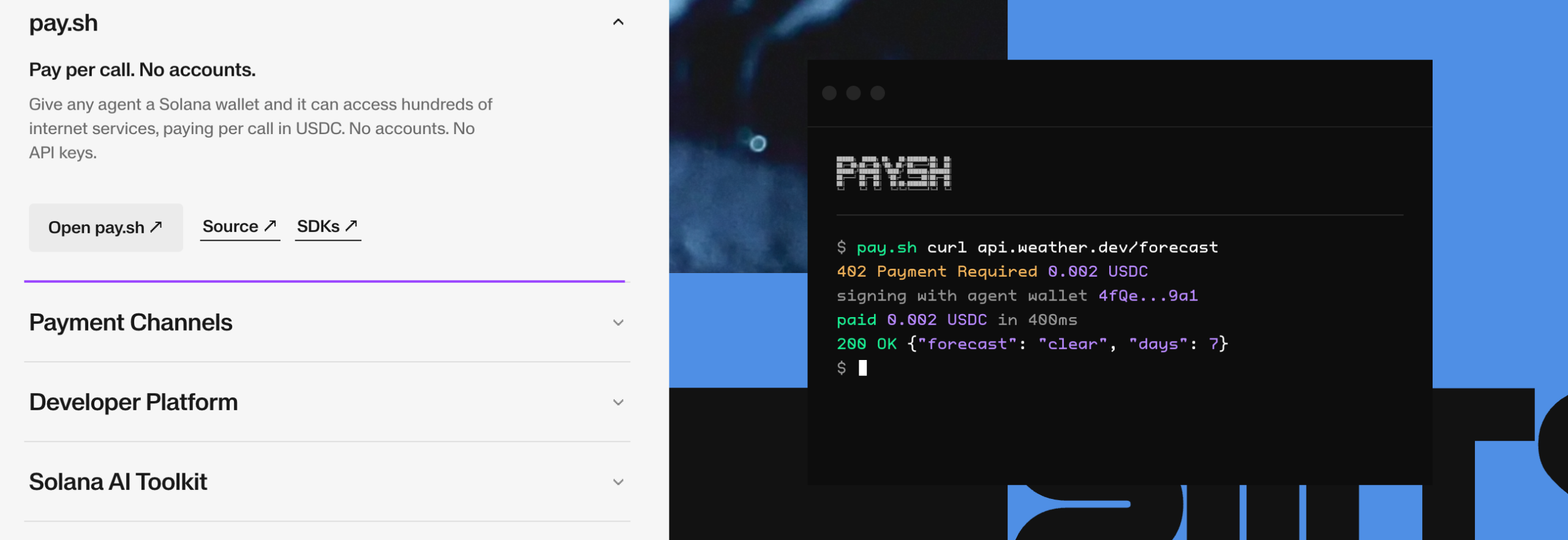
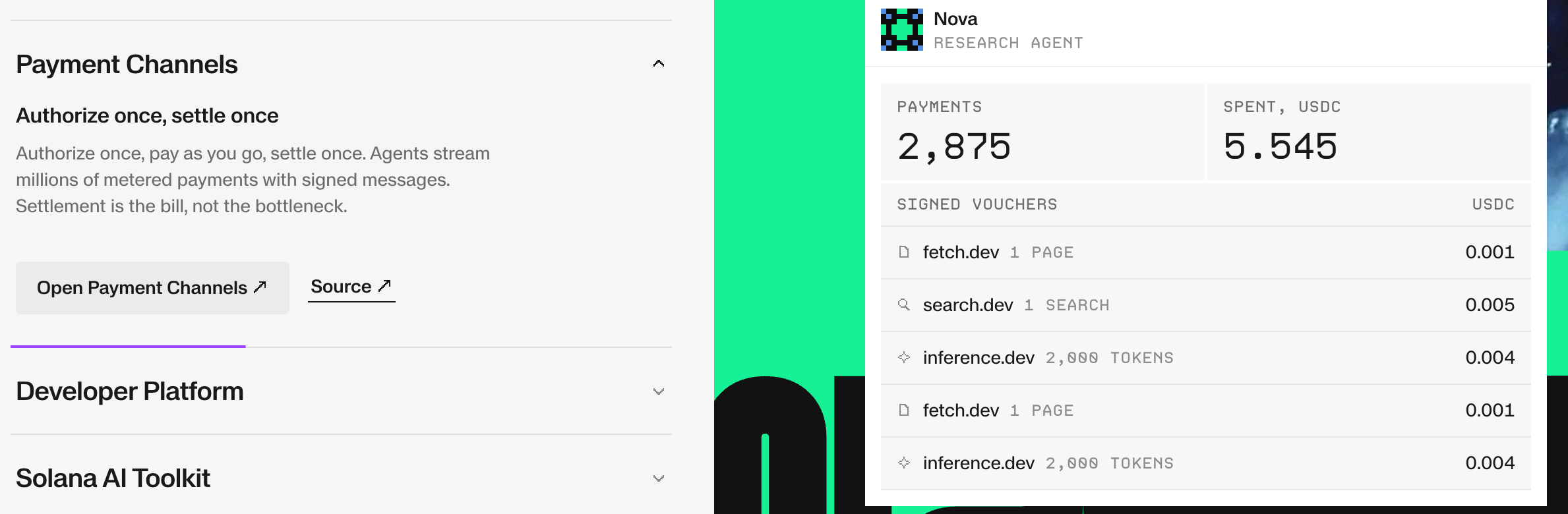
The pay.sh protocol is designed to let an agent with a Solana wallet pay USDC for individual API calls without a conventional account or API key. In the portal’s example, a weather-service call costs 0.002 USDC. Payment Channels address a different problem: repeated, rapid requests. Their proposed flow uses one on-chain authorization, off-chain signed payments and a final on-chain settlement, rather than a transaction for every call.
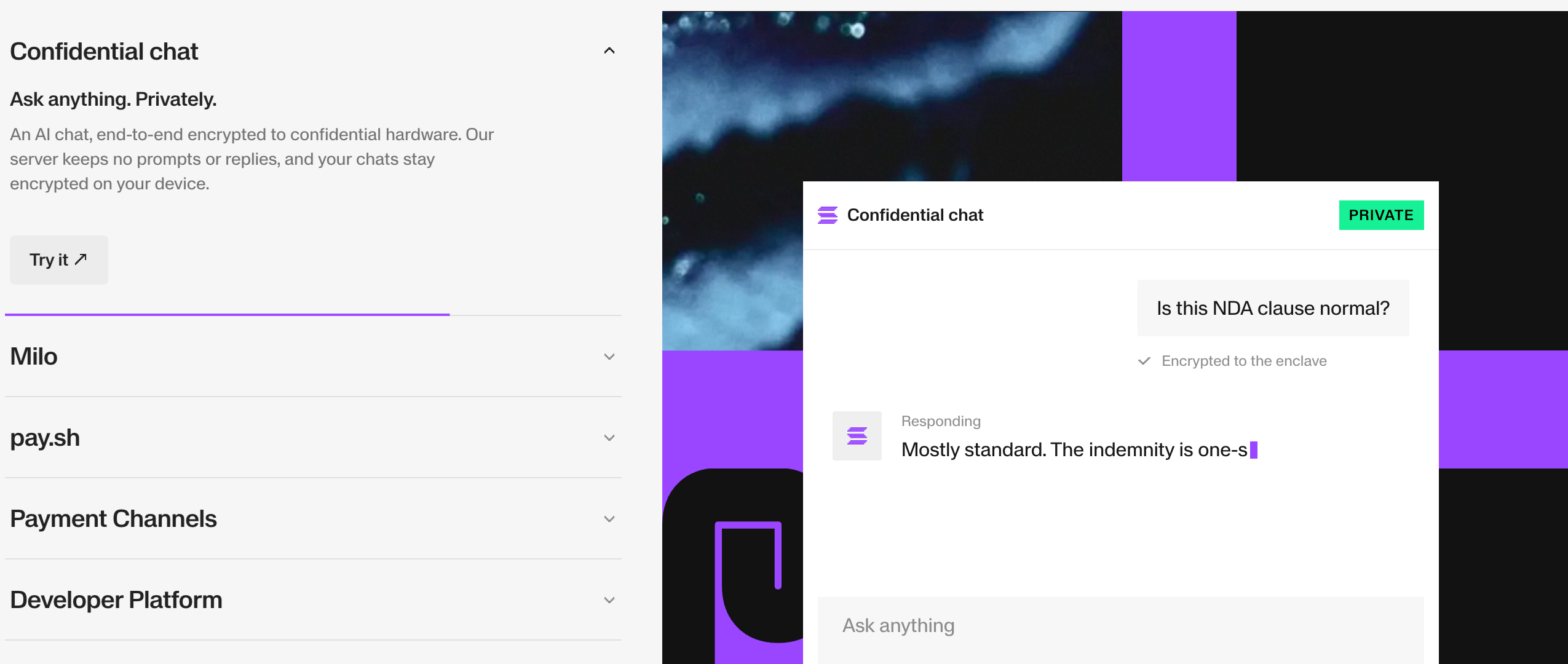
Solana Confidential Compute, developed with Nito, uses a trusted execution environment to run models off-chain. The reported demonstration ran GPT-OSS 120B; its design encrypts prompts and uploaded PDFs and provides on-chain verification of hardware security claims. The other two offerings are Milo, a demonstration trading agent that monitors markets and can rebalance SOL and USDC, and a developer platform with REST APIs for creating wallets, setting daily spending limits, screening addresses and supporting fiat withdrawals. Milo is a demonstration, not evidence that autonomous trading is broadly in use.
The adoption number has a narrow meaning
According to figures shown on the portal, more than 37 million x402-based agent API payment transactions had been recorded cumulatively on Solana by the reporting date. That is a transaction count, not a count of agents, people or paying customers. The source gives no time-series baseline or retention measure, so the figure alone cannot establish whether usage is growing or durable.
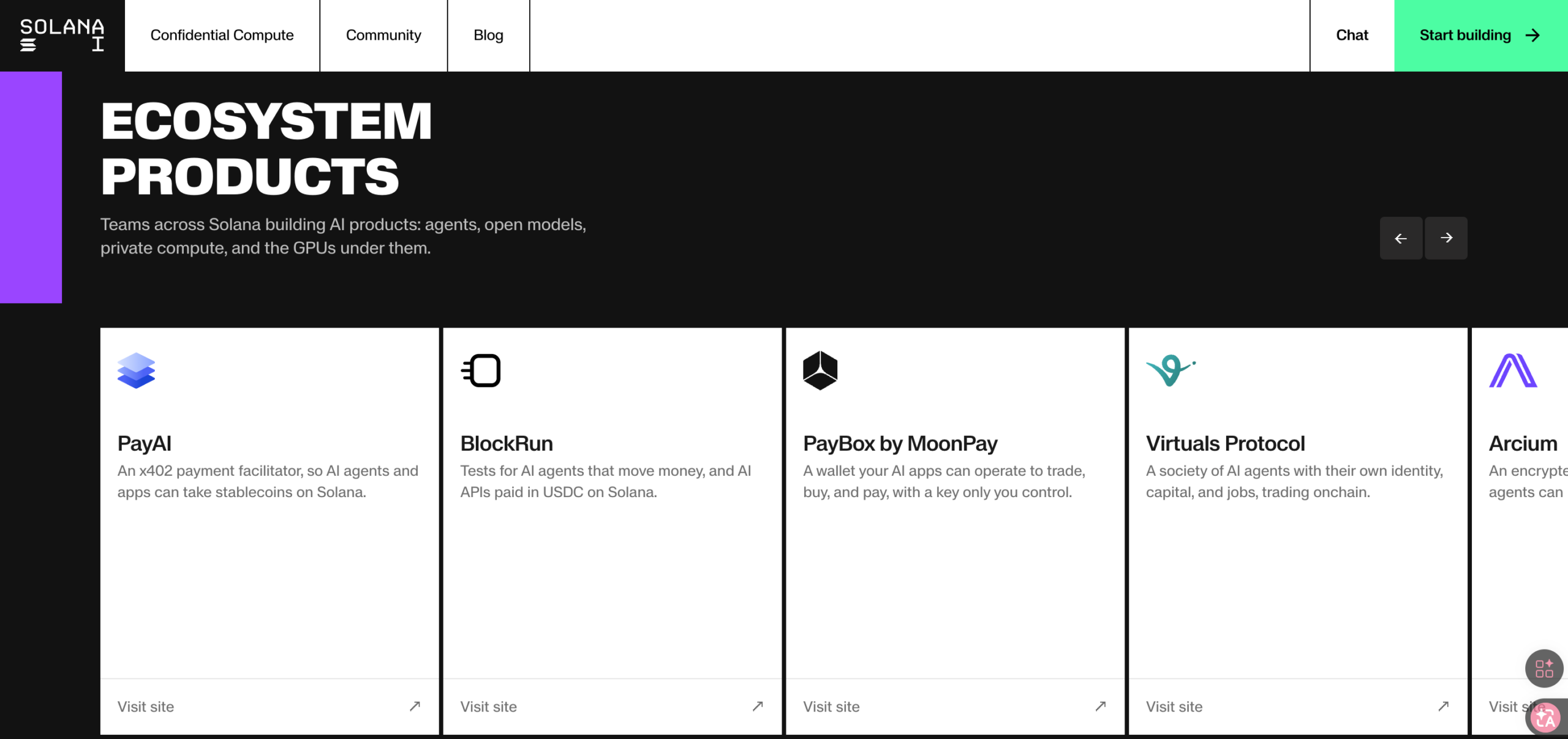
The portal groups 28 projects into six areas. Examples include ElizaOS, SendAI and Virtuals Protocol for agent development and coordination; PayAI, BlockRun, PayBox, Crossmint and Dexter for payments and wallets; Render, io.net, Nosana and Akash for computing; and BitRobot, Grass and OpenLedger for data-related services. It also lists privacy and identity projects such as Arcium, Nito and very.org, alongside applications including Ramp, Circuit and Elfa. Inclusion on the portal does not, by itself, measure a project’s adoption.
Infrastructure first, sustained demand unproven
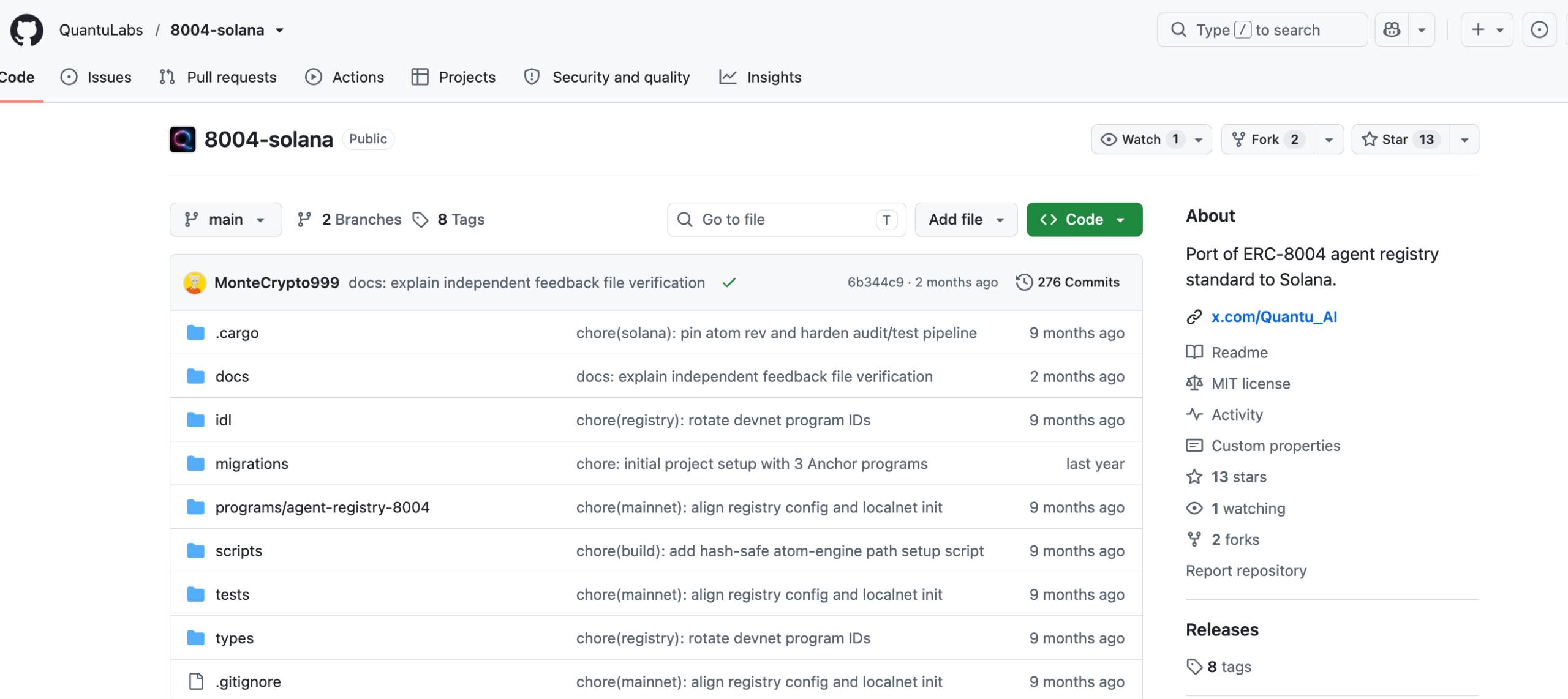
The accompanying developer materials include a Solana MCP server for Cursor and Claude Code, an Agent Kit supporting more than 60 on-chain operations, and an 8004-solana specification. The article describes these alongside the Ethereum community’s ERC-8004 agent-identity work and the x402 payment standard advanced by Coinbase. Its view that competition with Base and NEAR is driving Solana’s strategy is the author’s interpretation, not a measured cause of adoption.
The distinction for Solana’s growth story is between making agent payments possible and showing that agents repeatedly need them. The portal and its cumulative transaction figure show infrastructure and reported activity. They do not yet show how much demand for services such as paid weather or search APIs will persist, or whether it will generate sustained on-chain fees.