
In reporting published by Decrypt on November 11, 2026, the New York Stock Exchange had that week selected Avalanche to provide infrastructure for a tokenized securities platform then in preparation. Analysts called the selection a reputational gain, while warning it may not become a lasting increase in value for the network’s AVAX token.
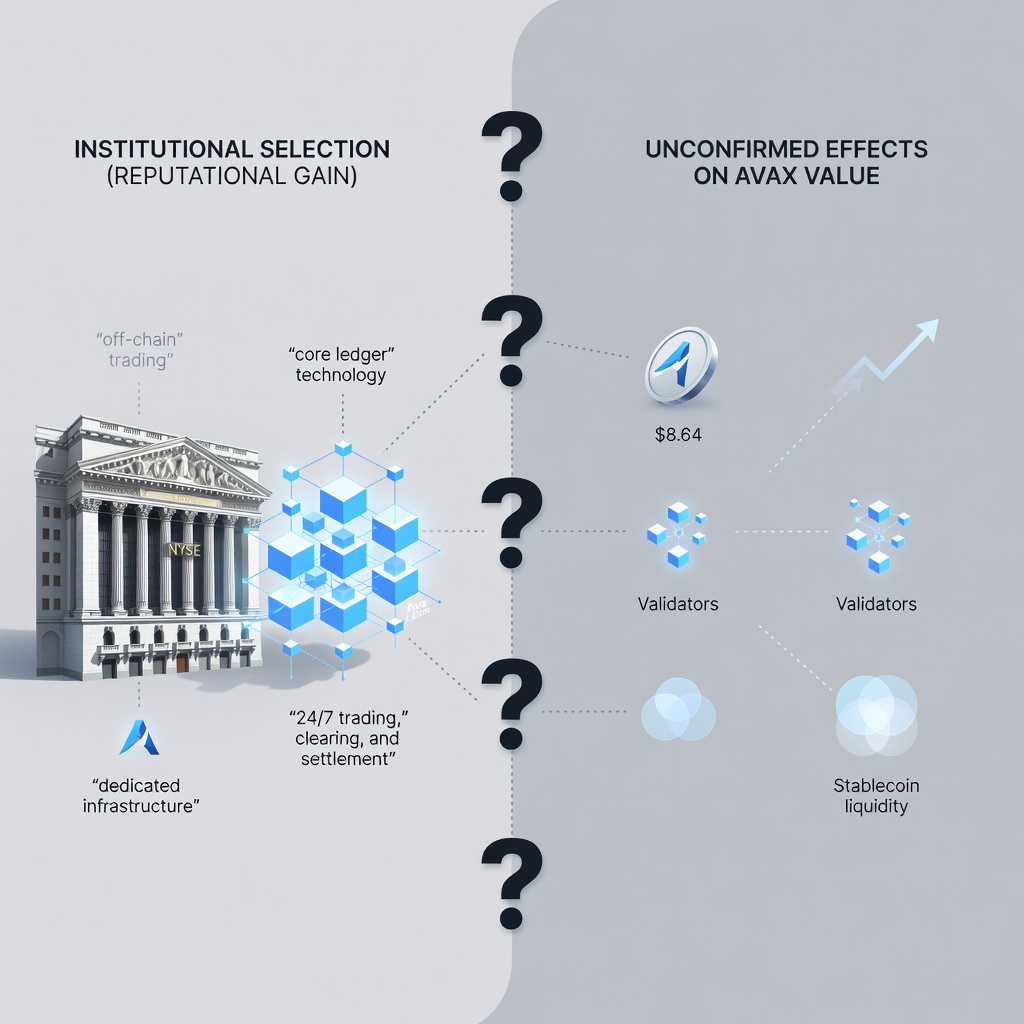
On the Monday described in that report, Ava Labs said Avalanche would serve as the “core ledger technology” for a tokenized securities platform developed by NYSE parent Intercontinental Exchange. The product is designed to allow 24/7 trading, clearing, and settlement of tokenized securities, subject to regulatory approval. No user counts, address totals, or retention figures were reported with the announcement.
Carlos Guzman, research analyst at market maker GSR, told Decrypt it was “definitely a big win for the project.” He said NYSE choosing the technology for settlement was “a big institutional credibility boost” and that it validated benefits blockchain can offer traditional financial plumbing, including instant settlement and programmability.
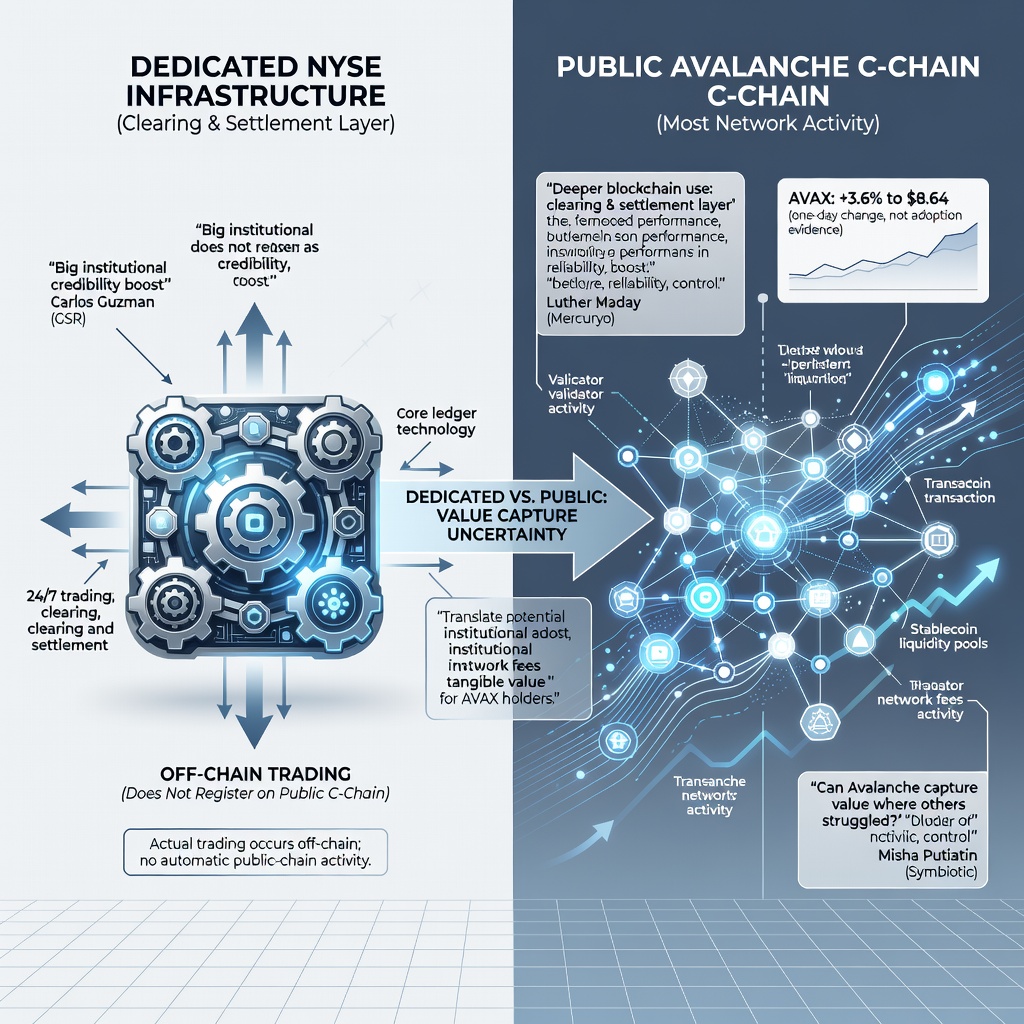
Luther Maday, head of North America at crypto payments firm Mercuryo, told Decrypt the decision followed a year of testing on Avalanche and signaled that the network had passed checks on “performance, reliability, and control.” He said NYSE had chosen the technology for the clearing and settlement layer, “a much deeper use of blockchain than simply issuing a tokenized asset on a network.”
Decrypt data cited in the same report showed AVAX up 3.6% over the prior day to $8.64. That figure is a one-day price change against the previous day’s level, not a count of users, addresses, transactions, or retained activity, and the report did not treat the move as evidence of adoption.
Guzman said NYSE would use Avalanche’s infrastructure for clearing and settlement while actual trading would still happen off-chain. The reporting said this activity would run on dedicated Avalanche infrastructure rather than the public C-Chain, where most of the network’s activity occurs. Maday said he would “be careful about translating the news directly into expectations for activity on the public C-Chain.” He pointed to still-unspecified details of how AVAX might be used inside that dedicated setup, and said stablecoin liquidity, validator activity, and network fees could see a boost. Those possibilities were framed as things to watch, not as measured gains against a stated baseline.
The November 11, 2026 report also noted related tokenization efforts that do not, by themselves, show Avalanche usage. NYSE had teamed with Blockchain.com to sell tokenized stocks and ETFs to crypto investors. ICE was working with OKX on a 24/7 tokenized stock venue under an SEC exemption. Morgan Stanley had started tokenizing securities of its own. Participation was incomplete: all seven so-called “Magnificent Seven” stocks, including Apple and Meta, opted out of share tokenization on the OKX-ICE venue, along with dozens of other companies.
Even if tokenization grows, the report did not treat that as guaranteed value for AVAX holders. Misha Putiatin, founder of collateral markets platform Symbiotic, told Decrypt: “The main question for Avalanche is whether it can do what other blockchains have struggled to do: capture value.” He added that Avalanche has “always had an unusually outcome-focused team for this industry, so I suspect they have plans for that, but it remains to be seen.” Ava Labs did not immediately respond to Decrypt’s request for comment.
Source: decrypt.co (originally published 2026-11-11 18:53 UTC+8)